
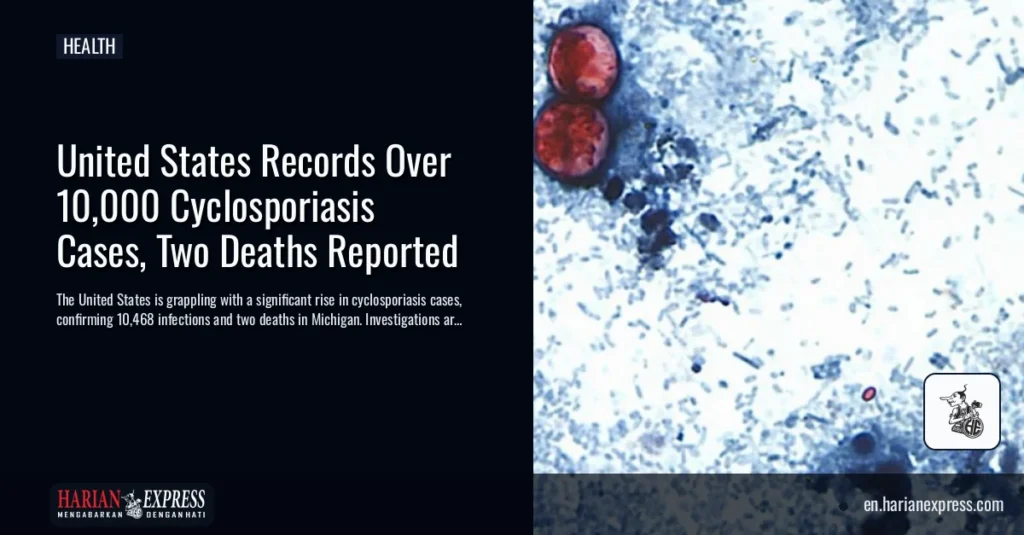
HARIANEXPRESS – The United States is currently experiencing a significant increase in cyclosporiasis cases, a gastrointestinal infection caused by a parasite often transmitted through contaminated food or water. As of August 3, 2026, a total of 10,468 domestically acquired cases have been confirmed through laboratory testing across the nation.
The U.S. Centers for Disease Control and Prevention (CDC) reported that these cases have been identified in 47 states. At least 517 patients required hospitalization, and tragically, two deaths were recorded in Michigan. These figures encompass patients who began experiencing symptoms on or after May 1, 2026, and had no history of international travel within 14 days before their illness began.
Cyclosporiasis Cases Continue to Rise
Health officials anticipate that the number of confirmed cases is likely to grow further. There is typically a delay of about six weeks between the onset of symptoms and the reporting of cases to the CDC.
Moreover, authorities are actively reviewing more than 12,255 additional reports that have yet to be confirmed by laboratory tests or require further analysis. The CDC has emphasized that the national count does not stem from a single source of transmission. Various unrelated cyclosporiasis outbreaks and individual cases are under investigation across different regions of the United States.
Major Outbreak Linked to Iceberg Lettuce
One of the largest outbreaks currently being investigated has been linked to iceberg lettuce originating from the Taylor Farms de Mexico facility in central Mexico. As of August 5, 2026, this particular outbreak accounts for at least 6,358 cases across 15 states, with 278 patients needing hospital care.
Epidemiological data and supply chain tracing indicate that these lettuce products were contaminated with Cyclospora and consumed by numerous patients before they fell ill. Some cases have been associated with exposure to lettuce served at Taco Bell outlets or through Taylor Farms de Mexico products that were subsequently recalled.
On July 17, 2026, Taylor Farms voluntarily recalled all iceberg lettuce sourced from central Mexico from the U.S. market. The affected products were distributed in various packaging types to consumers, restaurants, and retailers in at least 27 states.
The CDC urges the public not to consume any products included in the recall list.
Although the expiration dates for most of these products have likely passed and they are presumed to be unavailable in stores or restaurants, individuals are still advised to check any supplies they might have stored at home. Health authorities also reiterated that the lettuce-related outbreak represents only a portion of the total cases recorded nationally. Thousands of other infections are still being investigated and are likely to originate from different sources.
Two Fatalities Reported in Michigan Due to Cyclosporiasis
Tragically, two patients died in Michigan after being identified as part of the cyclosporiasis outbreak. Medical records indicate that both individuals had serious pre-existing health conditions, which were likely exacerbated by the infection and subsequent dehydration.
Both patients began experiencing illness before the lettuce recall was announced on July 17, 2026. While cyclosporiasis is generally not life-threatening, prolonged diarrhea can lead to significant fluid loss and increase the risk of complications. This risk is particularly high for the elderly, children, patients with weakened immune systems, and individuals with underlying health conditions.
Understanding Cyclosporiasis: Parasite, Not Virus
Cyclosporiasis is an intestinal illness caused by a microscopic parasite known as Cyclospora cayetanensis. Individuals can become infected by ingesting food or water contaminated with this parasite. In the United States, previous outbreaks have also been linked to fresh produce.
The most common symptom is watery diarrhea, which can occur repeatedly. Patients may also experience loss of appetite, weight loss, abdominal cramps, bloating, nausea, fatigue, vomiting, headaches, body aches, and a mild fever. Symptoms typically manifest around one week after exposure, although the incubation period can range from two days to two weeks or even longer.
Without appropriate treatment, symptoms can persist for several days to more than a month. Symptoms may also temporarily disappear only to return later. Unlike some other gastrointestinal diseases, direct human-to-human transmission of cyclosporiasis is considered uncommon. The parasite shed in feces requires at least one to two weeks in the environment to develop into a form that can infect others.
Public Advised to Monitor Symptoms and Seek Medical Help
The CDC encourages anyone experiencing prolonged watery diarrhea to contact a healthcare professional. Special diagnostic tests may be necessary because Cyclospora infection is not always detected through routine stool examinations.
The combination drug trimethoprim-sulfamethoxazole (TMP-SMX) is the preferred treatment for cyclosporiasis. While some individuals with healthy immune systems may recover without medication, the illness can potentially last longer. Antibiotic use should always be based on medical examination and guidance.
To minimize the risk of infection, the public is advised to wash hands thoroughly before and after handling fruits and vegetables. It is also recommended to rinse fresh produce under running water, discard any damaged parts, and promptly refrigerate cut or cooked produce. However, it is important to note that washing may not always eliminate all parasites from already contaminated products.
The current surge in cases highlights the significant challenges involved in tracking diseases transmitted through the food supply chain. The CDC, alongside the U.S. Food and Drug Administration (FDA), state governments, and local health authorities, continues its investigations to identify other potential sources of transmission and prevent further illnesses.
These ongoing efforts are critical as the current national figures do not stem entirely from a single source of transmission. The CDC has noted that numerous unrelated outbreaks and individual cases of cyclosporiasis are currently under investigation across various regions of the United States.
Furthermore, the total number of confirmed cases is anticipated to rise. This expectation is due to a reporting lag of approximately six weeks between the onset of symptoms and their official submission to the CDC. Health authorities are also reviewing over 12,255 additional reports that have yet to be confirmed by laboratory tests or require further analysis, indicating the potential for a larger scope of infection.
The challenges in tracing diseases transmitted through complex food supply chains are significant, as evidenced by this year’s surge in cases. Continued public awareness of symptoms and preventive measures, combined with the diligent work of health agencies, remains vital in mitigating the impact of cyclosporiasis outbreaks across the nation.