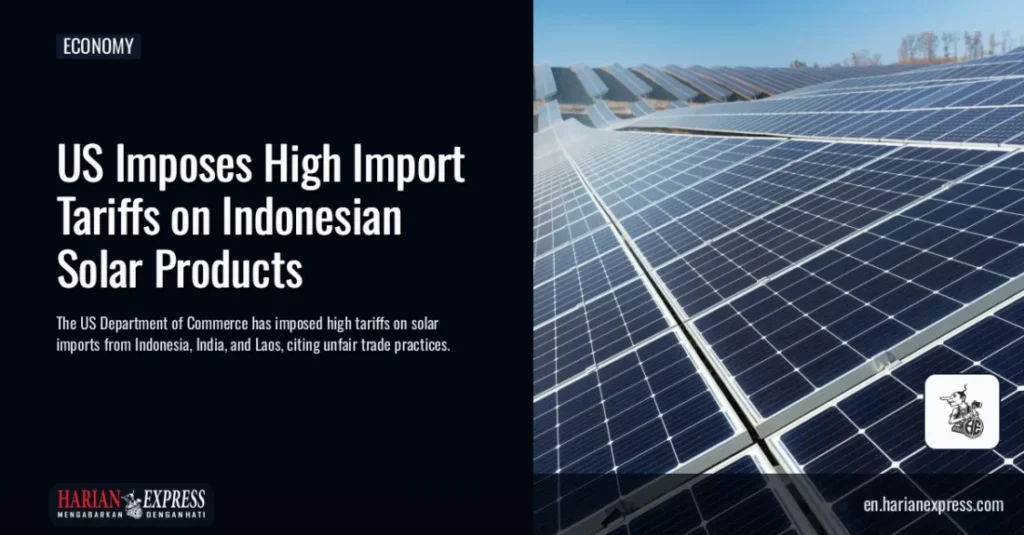
HARIANEXPRESS – The United States Department of Commerce has officially imposed high import tariffs on solar cells and panels from Indonesia. This protectionist policy also targets similar renewable energy products originating from India and Laos.
Background of the Tariff Policy
The US government implemented these significant tariffs because they deemed the solar imports to be unfairly priced. They argued that these products entered the domestic market at uncompetitive and unfair rates, disrupting local trade.
This decision escalates a long-standing trade dispute in the renewable energy sector. The roots of this conflict trace back to previous trade measures implemented over a decade ago.
Relocation of Global Manufacturers
Since 2012, the United States has imposed strict anti-dumping and anti-subsidy duties on Chinese solar panels. These strict measures forced global producers to shift their manufacturing bases to other Asian nations, including Indonesia.
This strategic relocation allowed companies to bypass traditional trade barriers and keep exporting to the US market. However, the subsequent surge in exports from these new hubs eventually triggered this latest response from American authorities.
Impacts on the Indonesian Solar Industry
The newly imposed high tariffs present a severe challenge for Indonesia’s solar manufacturing sector. This policy could significantly reduce the volume of solar product exports to the United States, which has been a primary destination.
Nevertheless, this situation also serves as a catalyst for local businesses to seek new opportunities elsewhere. Industry players are now urged to diversify their export destinations and look toward alternative global regions.
- Targeting new markets in Europe, the Middle East, and Africa.
- Deepening the domestic supply chain structure to maintain long-term competitiveness.
By adapting to these geopolitical trade shifts, local manufacturers can strengthen their resilience. Ultimately, navigating these trade barriers requires a robust response from both stakeholders and industry players.