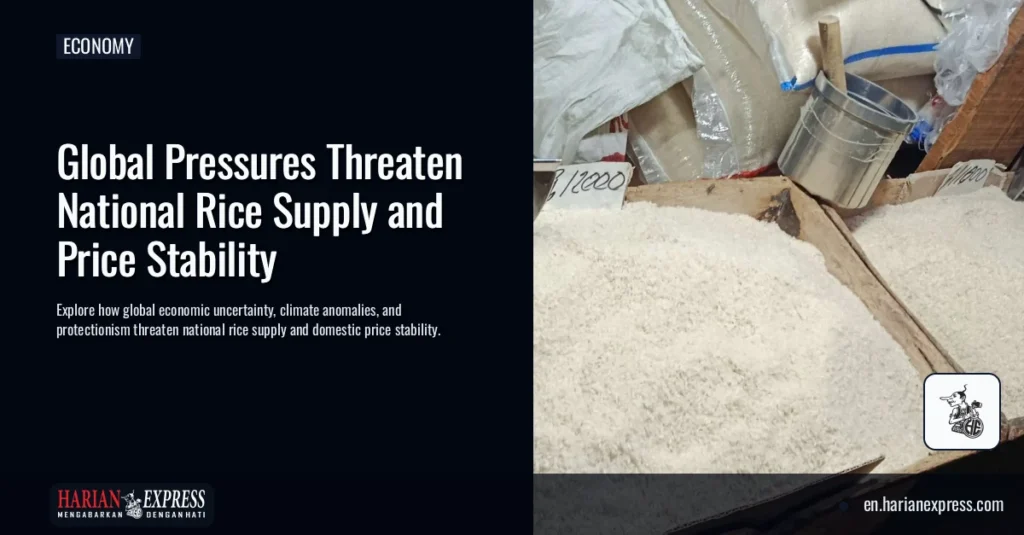
HARIANEXPRESS – The domestic rice market is currently facing potential disruptions in supply and price stability due to extreme weather and global economic uncertainties. This challenging situation highlights the critical vulnerability of the national food security system to both domestic and international pressures.
Root Causes of National Rice Supply Pressures
Climate Anomalies and Reduced Agricultural Productivity
Unpredictable shifts in climate patterns have severely disrupted traditional crop planting schedules across major agricultural regions. Consequently, paddy productivity in these key farming hubs faces a direct risk of decline, which may significantly reduce national harvest yields.
Global Protectionism Restricting Rice Imports
On the global stage, several key rice-producing nations are actively tightening their export regulations to protect their own domestic food reserves. This protective stance narrows the international rice market supply and drives global commodity prices upward.
Economic Implications and Macroeconomic Stability
Inflationary Risks and Impact on Low-Income Groups
As a highly strategic commodity, rice represents the single largest component within the national volatile food inflation basket. Any sudden price surge directly impacts the purchasing power of vulnerable citizens and low-income communities.
The Crucial Role of Government Rice Reserves
Managing the Government Rice Reserves (CBP) effectively has become an urgent task to maintain market stability. Swift and targeted market operations are essential to curb speculative price hikes by retail distributors.
Strategic Mitigation for National Food Security
Inter-Agency Collaboration and Agricultural Enhancements
Addressing these food security challenges requires seamless coordination among central governments, regional authorities, and logistics agencies. Practical solutions include accelerating seasonal planting cycles and strengthening vital agricultural irrigation systems.
Optimizing Logistics and Distributing Food Assistance
Enhancing distribution channels is critical to ensure rice supplies reach local markets efficiently and without unnecessary delays. Simultaneously, the timely distribution of food-related social assistance serves as an essential safety net for struggling households.
“National food security does not solely depend on the physical availability of stock, but also on the speed of policy responses in maintaining the balance between farmer welfare and consumer affordability.”