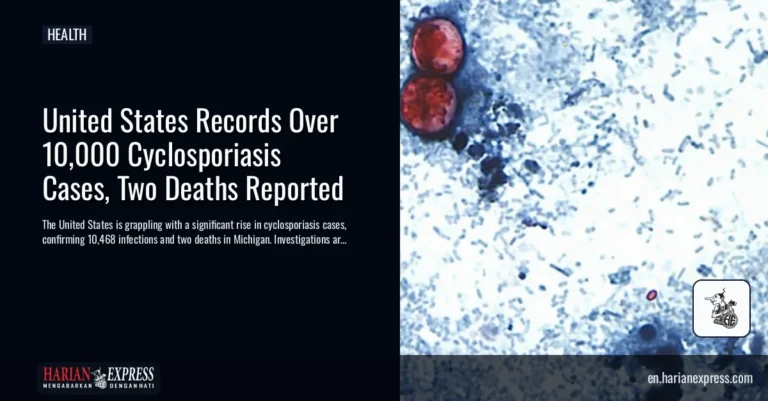
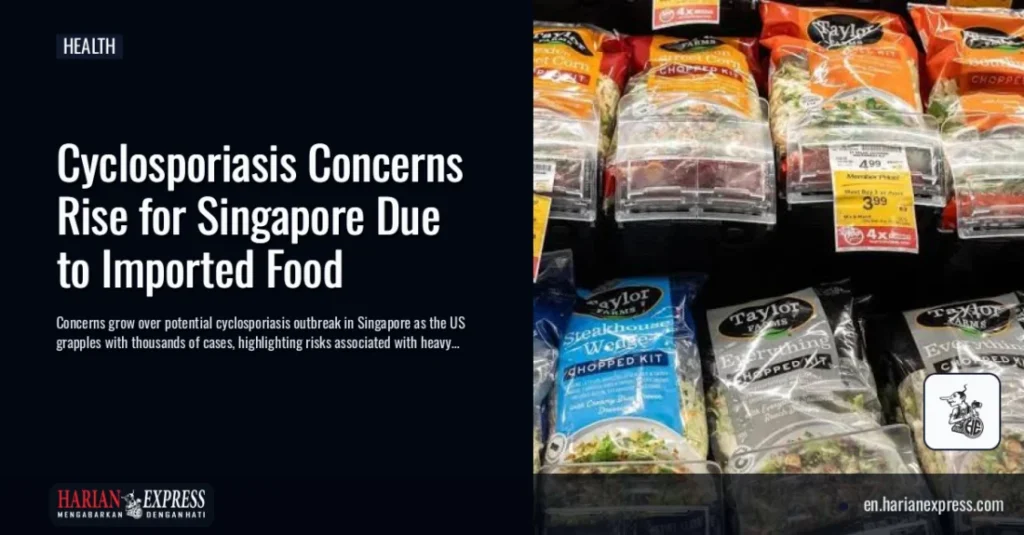
HARIANEXPRESS – A significant outbreak of cyclosporiasis in the United States has prompted concerns about its potential spread to other nations, including Singapore, which heavily depends on imported food supplies. The US outbreak has led to over 6,700 laboratory-confirmed cases and numerous suspected infections across multiple states.
While Singapore has not reported a similar widespread outbreak and confirmed cases of cyclosporiasis are rare there, health experts note the country’s vulnerability. Approximately 90 percent of Singapore’s food supply is imported, increasing its exposure risk.
Cyclosporiasis is an intestinal infection caused by the microscopic parasite Cyclospora cayetanensis. Symptoms typically include persistent, watery diarrhea, fatigue, nausea, stomach cramps, and a low-grade fever. Severe cases can occur in vulnerable populations such as infants, the elderly, or individuals with weakened immune systems.
The parasite spreads through the consumption of contaminated food or water, commonly affecting fresh produce like lettuce, herbs, and vegetables that are often eaten raw. Cyclospora oocysts, which are protective structures, can survive in the environment, including on crops and in water, and are not immediately infectious upon release from an infected person.
The source of the current US outbreak is still under investigation, though the U.S. Food and Drug Administration has identified a link between one cluster of illnesses and iceberg lettuce served at Taco Bell restaurants, supplied by a facility in central Mexico. Experts suggest that imported food supplies might be a major contributor to the outbreak’s scale, as Cyclospora is more prevalent in regions with limited sanitation and water treatment facilities.
Although cyclosporiasis is common in some tropical and subtropical regions, Singapore has historically recorded a low number of cases. Gastroenterologist Benjamin Yip mentioned seeing very few cases during his career. However, Singapore has experienced other foodborne illness incidents involving bacteria like Salmonella and E. coli in recent years, with central kitchens and food caterers identified as common sources.
Experts consider the possibility of a major Cyclospora outbreak in Singapore to be relatively low. William Chen, director of Nanyang Technological University’s Future Ready Food Safety Hub, pointed to integrated parasite-control systems in local farms and inspections of imported products by the Singapore Food Agency. Furthermore, Singapore’s diverse import sources from around 180 countries allow authorities to mitigate risks by restricting supplies from affected regions without significantly impacting overall food availability.
To reduce the risk of cyclosporiasis and other foodborne illnesses, health experts recommend basic food safety practices. These include thorough hand washing before food preparation, rinsing fresh produce under running water, verifying food sources, and cooking vegetables when feasible. However, washing may not always eliminate the risk entirely, as Cyclospora can withstand certain environmental conditions.
Treatment for infected individuals typically involves specific antibiotics. Preventing future outbreaks requires a collaborative effort among farmers, food producers, restaurants, and consumers. While Singapore’s stringent food safety controls make a large-scale outbreak unlikely, continuous monitoring and good hygiene practices remain crucial.