HARIANEXPRESS, BLITAR, EAST JAVA – The historical legacy of Indonesia’s founding president, Sukarno, continues to shape the identity of Blitar, a city in East Java closely associated with the country’s independence movement. The unveiling of an eighth statue dedicated to the former president has further strengthened the city’s reputation as an important destination for historical and heritage tourism.
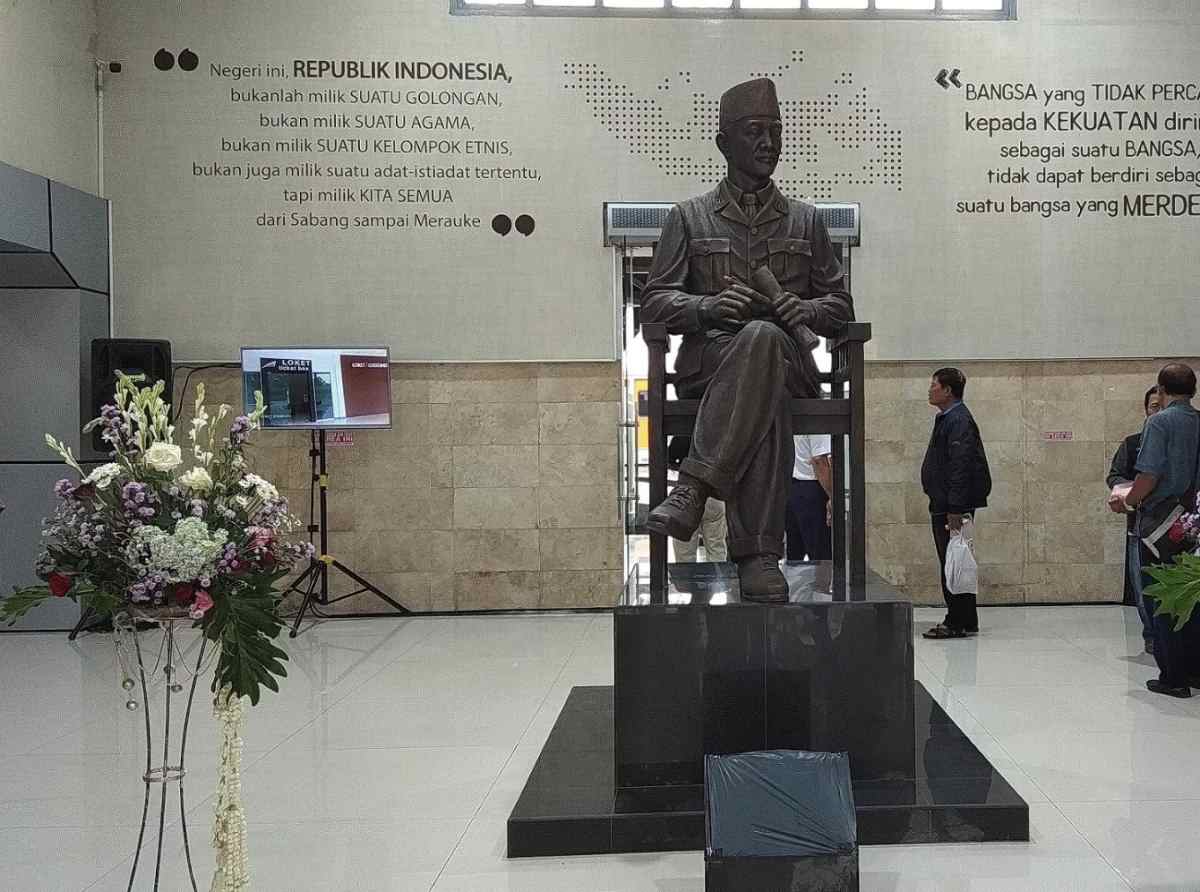
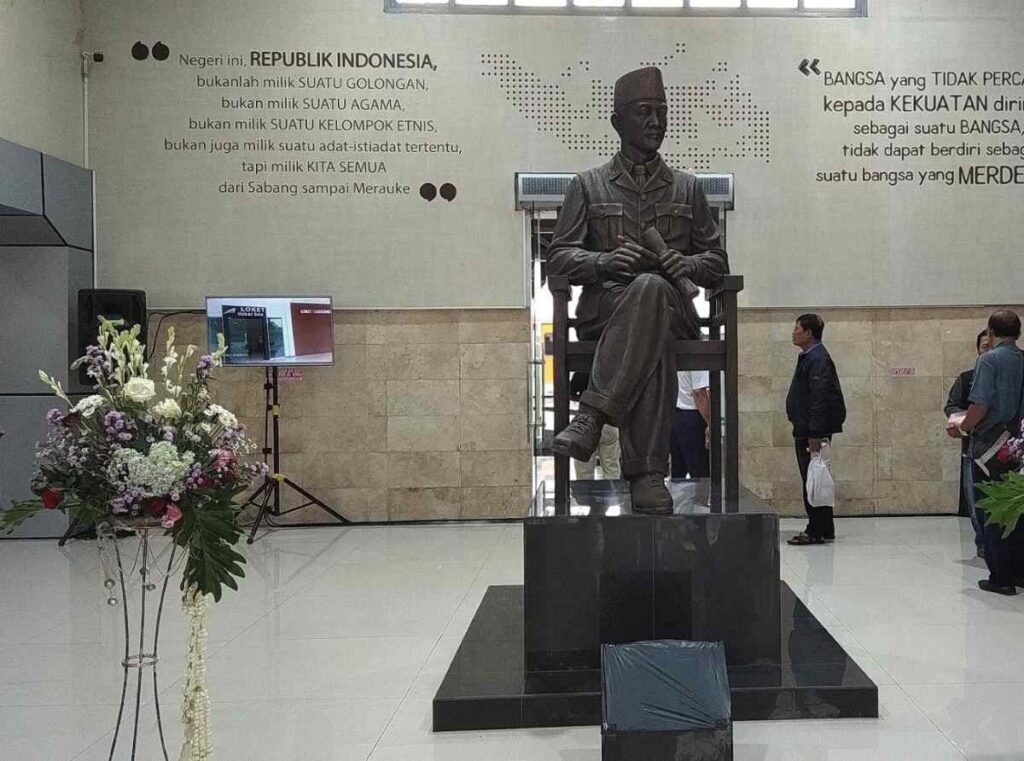
The statue, officially introduced on December 12, 2019, was installed in the lobby of Blitar Railway Station. Its presence offers travelers a glimpse into the life and influence of one of Indonesia’s most prominent historical figures.
Created by Balinese sculptor Ketut Winata, the resin statue depicts Sukarno seated in a chair while holding a rolled document in his left hand, symbolizing the proclamation of Indonesian independence. The sculpture is smaller than life-size and was designed to capture the former president’s distinctive appearance.
Edi Sukmoro, who served as president director of state railway operator PT Kereta Api Indonesia (KAI) at the time, described the monument as the first Sukarno statue installed inside an Indonesian railway station.
The initiative was also intended to encourage railway passengers to explore Blitar’s historical attractions, particularly Sukarno’s burial complex, one of the city’s most significant tourist destinations.
Blitar’s Deep Historical Connection with Sukarno
Blitar occupies a special place in Indonesia’s political and cultural history because it is the final resting place of Sukarno, the country’s first president and one of the central figures behind its independence.
Sukarno died in Jakarta on June 21, 1970, and was buried the following day in Blitar. His grave is located in Bendogerit, Sananwetan district, and has since become a destination for visitors interested in Indonesia’s struggle for independence.
Following the end of President Soeharto’s New Order administration in 1998, public interest in Sukarno’s legacy increased significantly. This renewed attention encouraged local authorities to develop historical landmarks and monuments celebrating the founding president.
However, the decision to bury Sukarno in Blitar has also been the subject of historical debate.
Indonesian historian Asvi Warman Adam, formerly of the Indonesian Institute of Sciences (LIPI), explained that Sukarno’s burial location was determined through Presidential Decree No. 44 of 1970, issued on June 21, 1970.
In his 2010 book, Bung Karno, Dibunuh Tiga Kali?, Asvi examined the political circumstances surrounding Sukarno’s final years and burial. He argued that the former president had expressed a wish to be buried near the Bogor Presidential Palace in West Java.
Asvi also interpreted several decisions taken during the transition to Soeharto’s administration as efforts to diminish Sukarno’s political influence. His interpretation remains one perspective within the broader historical discussion of Indonesia’s political transformation after 1965.
Eight Sukarno Statues Highlight Blitar’s Historical Identity
Since the beginning of Indonesia’s Reform era, Blitar has gradually expanded its collection of monuments dedicated to Sukarno.
Between 2000 and 2010, several statues were constructed at prominent locations throughout the city, including the Sukarno Memorial Complex and the Bung Karno Library, which was established in 2004.
Other monuments were installed near government buildings, public intersections, and historical sites associated with Sukarno’s family.
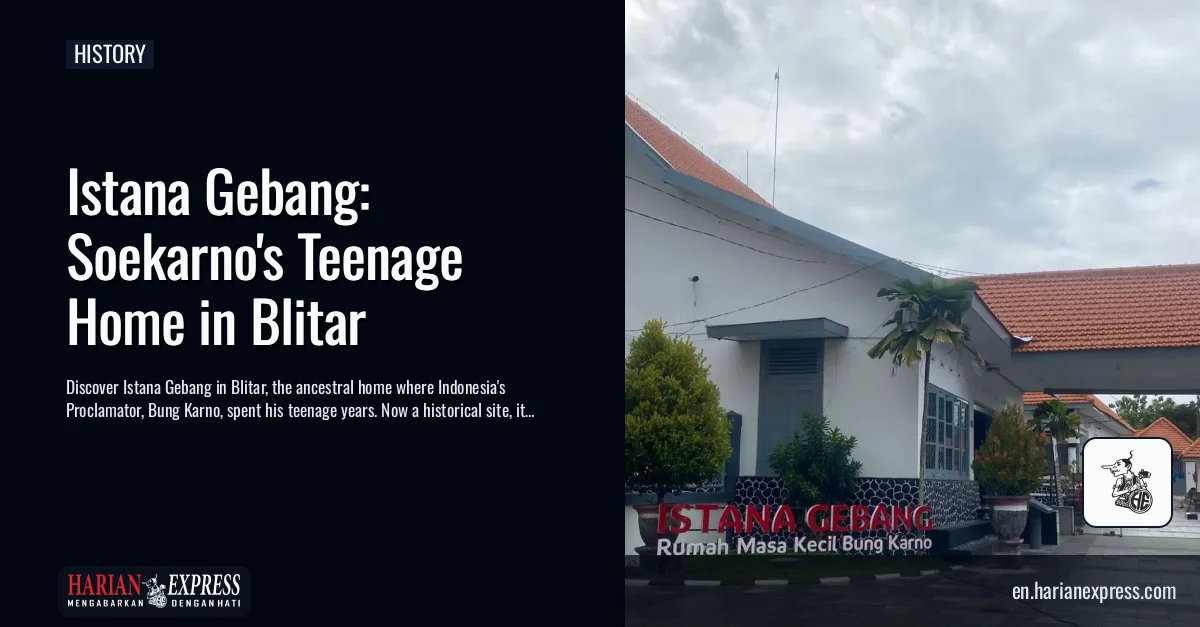
These locations include the mayor’s office, the Blitar regency pavilion, an intersection along Sumatra Street, and the grounds of Istana Gebang, a residence historically connected to Sukarno’s parents.
In 2017, former Indonesian president Megawati Soekarnoputri inaugurated a nine-meter-tall statue of her father at the Herlingga intersection.
The following year, another monument measuring approximately 14 meters in height was established outside the Blitar regent’s office in Kanigoro district.
With the addition of the railway station statue in December 2019, the city further emphasized its connection to Indonesia’s founding president.
Historical Tourism Supports Blitar’s Local Economy
Beyond their symbolic importance, the monuments have contributed to efforts to develop Blitar as a destination for historical education and nationalism-themed tourism.
Heru Santoso, who served as head of tourism management at Blitar’s tourism and culture office, explained that the monuments formed part of the local government’s strategy to strengthen the city’s tourism identity.
At the time, Sukarno’s burial complex attracted an average of approximately 1,500 visitors per day under normal conditions.
Visitor numbers could fall below 500 during quieter periods, while school holidays frequently brought substantially larger crowds. During peak holiday seasons, daily visits could exceed 5,000 people.
These tourism activities created economic opportunities for local residents, including small traders, transportation providers, food vendors, and businesses operating around historical attractions.
The continued development of Sukarno-related destinations was therefore viewed not only as an effort to preserve national history but also as a way to support the local economy.
Istana Gebang and the Future of Heritage Tourism
In addition to developing Sukarno’s burial complex and installing public monuments, local authorities outlined plans to improve other historical attractions associated with the former president.
Among the locations identified for further development was Istana Gebang, the former residence of Sukarno’s parents, Soekemi Sosrodihardjo and Ida Ayu Nyoman Rai.
The residence provides visitors with insights into Sukarno’s family background and personal history, complementing the historical information available at his burial complex and memorial library.
By connecting several heritage destinations, Blitar aimed to offer a more comprehensive educational experience for visitors interested in Indonesia’s independence movement and early political development.
Such initiatives also reflected growing recognition of heritage tourism as an important component of local cultural preservation and economic development.
Preserving Sukarno’s Legacy for Future Generations
For many Indonesians, Sukarno remains a defining figure in the nation’s history. His leadership during the independence movement and his role as Indonesia’s first president continue to influence discussions about national identity, political history, and cultural heritage.
In Blitar, this legacy is visible through memorial sites, museums, historical residences, and public monuments dedicated to his life and achievements.
The eighth Sukarno statue at Blitar Railway Station represents another chapter in the city’s ongoing effort to commemorate its historical association with the founding president.
More than a decorative landmark, the sculpture serves as a reminder of Indonesia’s journey toward independence and the continuing importance of preserving historical memory for future generations.