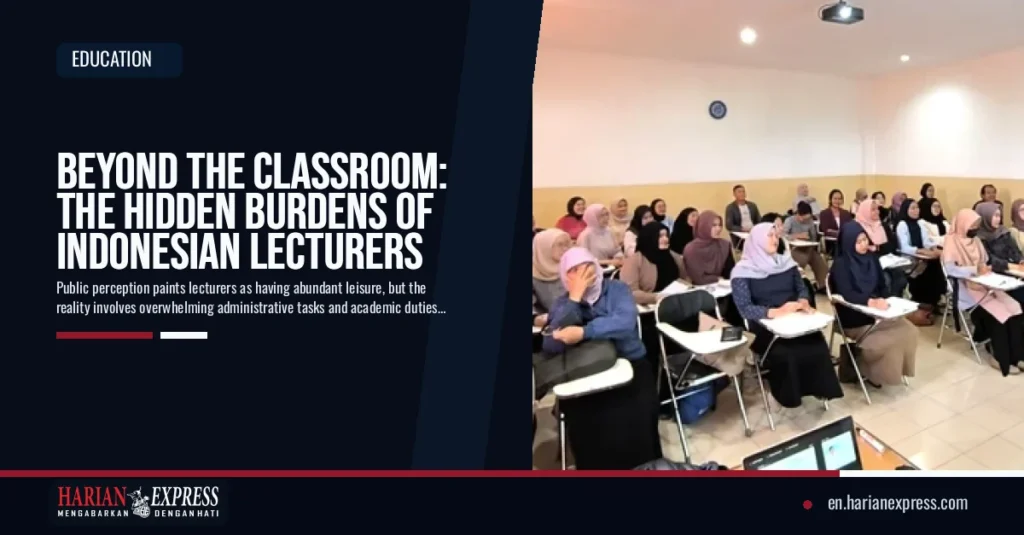
HARIANEXPRESS – Many perceive lecturers as having flexible schedules and abundant free time, yet this widely held belief clashes with the reality of extensive administrative and academic responsibilities. (30/7/2026)
The disparity between public perception and the objective reality of a lecturer’s workload in Indonesia is significant. Academics’ daily lives are dominated by a complex array of duties, far beyond the assumed balanced focus on teaching and research.
This heavy workload includes various administrative tasks, detailed academic responsibilities, and ongoing interactions with students. Lecturers frequently confront tight deadlines and numerous technical demands that deplete their energy.
Administrative burdens are substantial, requiring lecturers to complete the Lecturer Workload Report (BKD) and navigate the SISTER application.
These tasks also involve gathering performance evidence, managing campus administration, and actively participating in accreditation processes, all with strict reporting deadlines.
Beyond teaching, academic responsibilities are intricate and ongoing, including revisions of journals and Semester Learning Plans (RPS).
Lecturers must also correct assignments and exams, input grades, supervise theses, and compile grant proposals, often clashing with administrative deadlines.
Interaction and community service add another layer of demand, encompassing sudden meetings and student communications late into the evening.
The combination of these numerous small and large responsibilities creates significant mental pressure and physical exhaustion, starkly contrasting the public’s perception of ample free time.
The reality highlights how lecturers often find themselves without sufficient rest, relying on stimulants like coffee to cope with an unending pile of tasks.
Furthermore, concerns exist regarding their future welfare, as lecturers often lack pension funds, with retirement typically at 65 years old and no guaranteed old-age security.