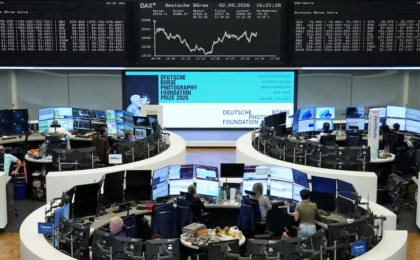

HARIANEXPRESS – Global financial markets are currently experiencing a period of significant uncertainty. Investors are actively re-evaluating the future outlook concerning interest rates, inflation, and the dynamics of sovereign debt.
A recent surge in pressure within global bond markets has led to an increase in borrowing costs. This development presents new challenges for governments, businesses, and consumers across various major economies.
Investor Focus Shifts Towards Key Economic Indicators
Investor attention is now primarily directed towards crucial upcoming economic data releases and decisions from central banks. These factors are expected to be pivotal in defining the future direction of global markets.
In the United States, upcoming inflation indicators are anticipated to offer significant signals regarding the Federal Reserve’s policy path. Policymakers there continue to strive for a balance between containing inflation and safeguarding overall economic stability.
Across Europe, the European Central Bank’s monetary policy trajectory remains a central point of focus. This is particularly relevant amidst ongoing inflationary pressures within the region.
Investors are closely monitoring how European policymakers will manage the delicate act of maintaining price stability while simultaneously fostering economic growth. This task is becoming increasingly complex in the current challenging environment.
Meanwhile, Japan has emerged as another key area of market interest due to rising bond yields. These yields are reshaping expectations around potential monetary normalization and shifts in domestic investment allocation.
Any changes in Japanese capital flows could have wider implications. Such shifts might affect global currency markets and international bond markets more broadly.
Addressing Sovereign Debt Risks
Beyond the realm of monetary policy, sovereign debt risks are increasingly becoming a major concern for investors. This theme is gaining significant importance in current market discussions.
The rising costs for governments to borrow money underscore concerns regarding fiscal sustainability. This is especially true for economies already grappling with high debt burdens and tighter financial conditions.
Complex Phase Ahead for Global Markets
Overall, markets are transitioning into a more complex phase where several key elements will shape investor sentiment. These primary forces include inflation trends, central bank decisions, fiscal discipline, and geopolitical developments.
The upcoming weeks are poised to be critical in determining the trajectory of global markets. They will show whether markets can move towards greater stability or if they will face renewed volatility stemming from persistent macroeconomic pressures.