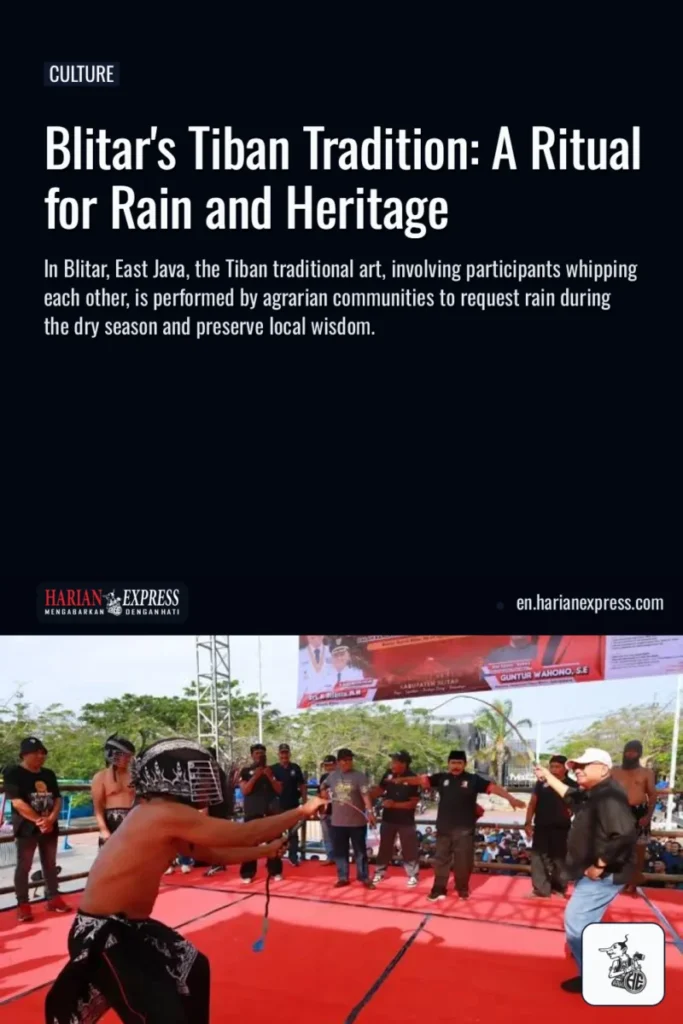
HARIANEXPRESS – Agrarian communities in Blitar, East Java, performed the traditional Tiban art on Sunday, August 9, 2026.
This distinctive folk art, characterized by participants whipping each other, serves as a profound symbol for requesting much-needed rain during prolonged dry seasons. It simultaneously represents a dedicated effort to preserve invaluable local wisdom and deeply rooted ancestral cultural traditions, ensuring their continuity for future generations.
The Tiban Tradition in Blitar: A Community Ritual
A Sacred Plea for Rain and Preserving Heritage
The Tiban traditional art is a significant cultural event consistently organized by agrarian societies, particularly as they face the onset of the dry season. This ritual stands as a powerful, heartfelt symbol, embodying the community’s collective plea for the urgent arrival of rainfall.
Beyond its immediate function of seeking essential water for crops and livelihoods, this ancient tradition holds a deeper purpose. It functions as a crucial endeavor to actively preserve local wisdom and the rich tapestry of cultural heritage inherited from generations of ancestors.
The Ritual of Mutual Whipping
During the public ceremony of Tiban, participants engage in a striking and distinctive act of mutual whipping. This physical exchange between individuals forms the core and most recognizable feature of the traditional art’s performance.
The act of participants whipping each other is not merely a display but is integral to the spiritual and symbolic nature of the entire Tiban ritual. Each interaction within the ceremony reinforces its traditional significance and purpose.
Enduring Cultural Significance Across East Java
This vibrant folk art, deeply rooted within the local community of Blitar, is not an isolated phenomenon. It proudly continues to thrive and is meticulously preserved in several other regions scattered across East Java.
The persistent presence of Tiban highlights the unwavering commitment among these communities to uphold and pass down these invaluable ancestral cultural traditions. This commitment ensures their unique heritage remains a vital and celebrated part of regional identity.