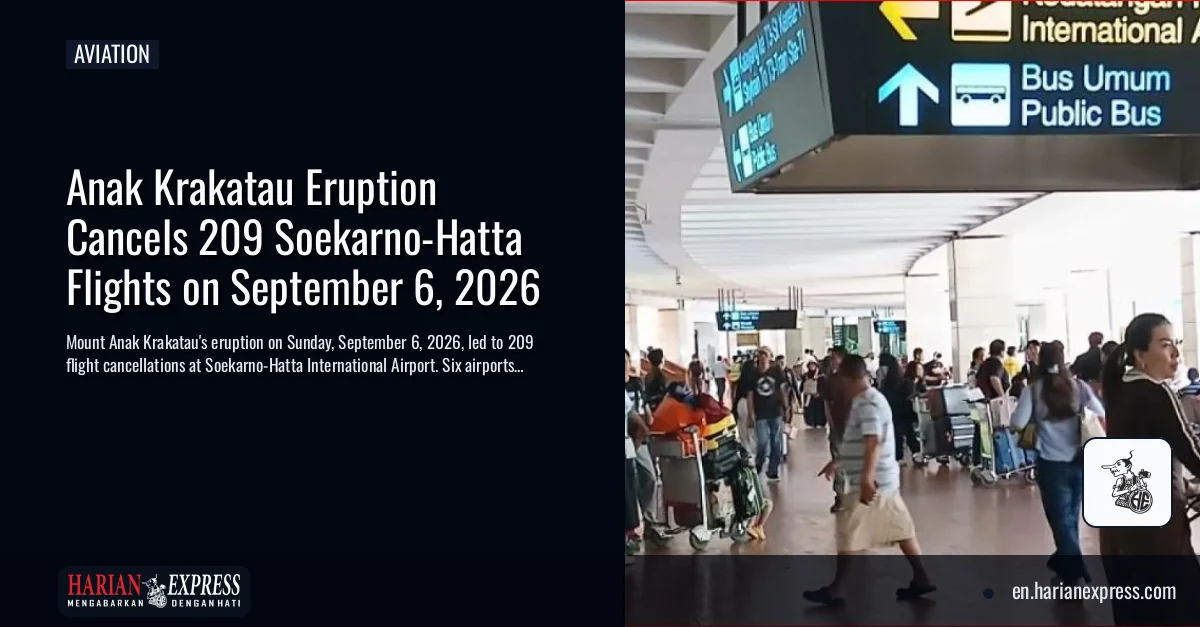
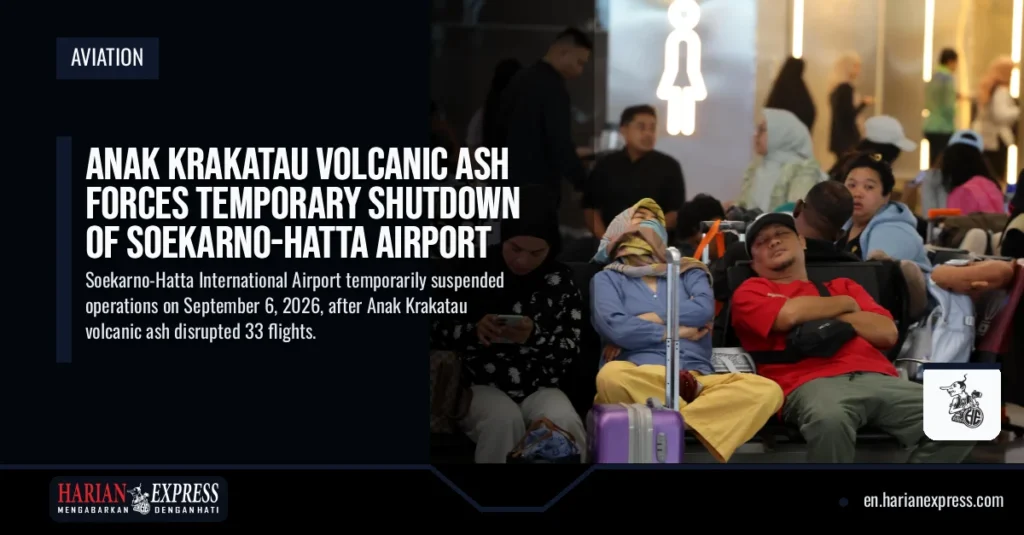
HARIANEXPRESS – Indonesian aviation authorities temporarily closed Soekarno-Hatta International Airport early Sunday, September 6, 2026, following the detection of volcanic ash generated by the eruption of Mount Anak Krakatau. The temporary shutdown disrupted at least 33 flights at the nation’s primary aviation hub northwest of Jakarta.
The suspension was originally scheduled to run from 1:30 a.m. to 5:30 a.m. local time (UTC+7). Officials later extended the operational closure through 9:30 a.m. as safety teams evaluated ongoing volcanic activity.
The Director General of Civil Aviation at Indonesia’s Ministry of Transportation, Lukman F. Laisa, stated that the operational suspension was implemented under Notice to Airmen (NOTAM) No. A3341/26. The decision came immediately after field verification proved the presence of airborne volcanic material across the facility.
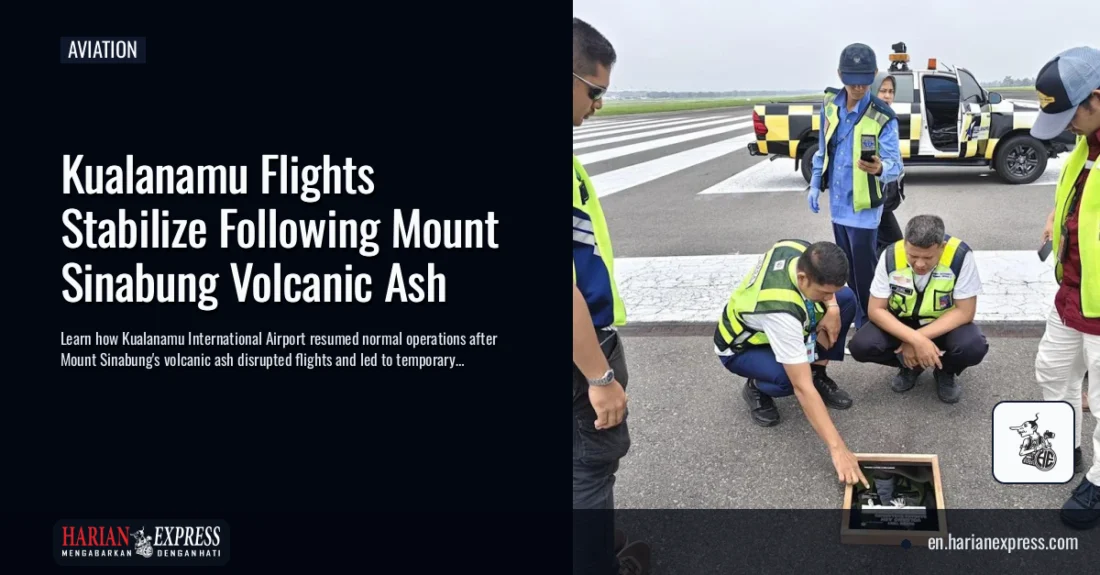
“The decision was taken following a paper test conducted on Sunday, September 6, from 12:35 a.m. to 1:05 a.m., which showed a positive indication of volcanic ash in the Soekarno-Hatta International Airport area,” Lukman said in an official statement.
Geographic Location and Eruption Context
Soekarno-Hatta International Airport is situated in Tangerang, Banten province. It operates as the busiest gateway for domestic and international air travel in Indonesia.
Mount Anak Krakatau itself is an active volcanic island located in the waters of the Sunda Strait between Java and Sumatra. Its recent eruptive surge ejected ash plumes high into the atmosphere, which prevailing winds subsequently transported across western Indonesia.
Breakdown of Affected Flight Operations
According to flight monitoring data recorded by the Ministry of Transportation up to 10 p.m. Saturday, 33 total flights were interrupted. The majority of the affected services were on international routes connecting key global destinations.
The ministry confirmed that 28 international flights experienced severe disruptions during the operational pause:
- Cancelled services: 16 international flights were cancelled entirely.
- Delayed departures: 7 international flights faced departure delays.
- Rescheduled journeys: 5 international services were moved to alternative departure slots.
These disrupted international operations impacted travel corridors connecting Jakarta with Singapore, Hong Kong, Sydney, and Seoul’s Incheon International Airport. Additional affected long-haul and regional routes included services to and from Doha, Amsterdam, and Kuala Lumpur.
Domestic connectivity was also hampered, with five domestic services suffering immediate operational changes. Four of these domestic flights were cancelled outright, while one incoming service was forced to divert away from the airport.
The affected domestic destinations included scheduled links between Jakarta and Bandar Lampung. Departures connecting the capital with Denpasar in Bali and Surabaya in East Java were also impacted.
Cascading Operational Impacts and Dynamic Management
Officials warned that flight schedules might face ongoing knock-on effects even after runways and terminals reopen. Interruptions to aircraft rotations, crew scheduling, and fleet positioning often trigger delays throughout the remainder of the operational day.
“The adjustment of flight operations will continue to be carried out dynamically based on developments in the field,” Lukman said.
The Ministry of Transportation emphasized that recovery protocols require close monitoring due to terminal constraints and connecting flight schedules. Unplanned closures at the primary hub naturally risk widespread backlogs across the entire national aviation grid.
Chronology Leading to the Airport Shutdown
Normal flight activities had been maintained across Soekarno-Hatta throughout Saturday morning. An initial volcanic ash test conducted earlier had returned negative results within the terminal and runway zones.
At 9:10 a.m. Saturday, an official aviation volcanic ash advisory indicated that the plume remained roughly 31.4 kilometres away from the airport grounds. Monitoring personnel maintained continuous surveillance over the drifting cloud as Mount Anak Krakatau produced further eruptive bursts.
Atmospheric and safety conditions shifted noticeably past midnight into Sunday morning. A subsequent paper test conducted between 12:35 a.m. and 1:05 a.m. confirmed that ash particles had descended onto the facility grounds.
Following the positive test result, state airport operator InJourney Airports confirmed that the suspension would remain in force until 9:30 a.m.
“In response to the increased eruptive activity of Anak Krakatau, Soekarno-Hatta International Airport suspended flight operations from 5:30 a.m. to 9:30 a.m.,” InJourney Airports Corporate Secretary Group Head Arie Ahsanurrohim said.
Aviation Risks and Safety Protocols
Airborne volcanic ash presents acute operational hazards to modern civil aviation. Tiny abrasive particles reduce pilot visibility, coat airfield infrastructure, and cause catastrophic damage to turbine engines and sensitive flight equipment.
Because of these severe hazards, regulators instituted the shutdown purely as a proactive safety precaution. Authorities affirmed that no aviation accidents occurred at the airport in relation to the ashfall.
Inter-Agency Coordination and Passenger Guidance
Indonesia’s Directorate General of Civil Aviation confirmed ongoing collaboration with key aviation stakeholders. These include the Meteorology, Climatology and Geophysics Agency, AirNav Indonesia, airlines, and airport ground operators.
Airline customers holding departures from Soekarno-Hatta were urged to check current flight statuses directly with their carriers before travelling to the airport. Passengers were also told to prepare for schedule alterations and terminal congestion during the recovery period.
Travellers seeking airport assistance can contact the InJourney Airports contact centre at 172. The Ministry of Transportation reiterated that passenger safety will serve as the guiding priority behind all operational decisions.