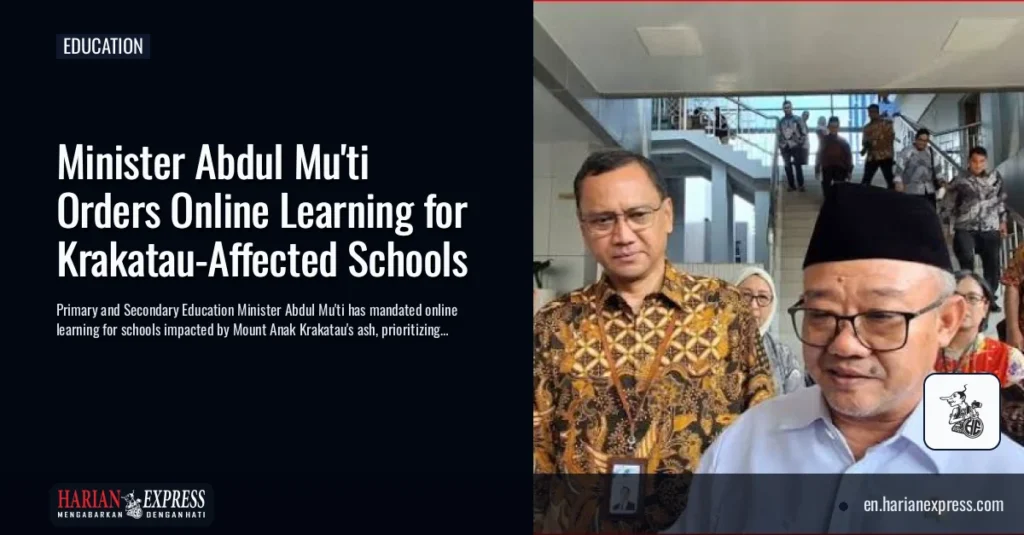
HARIANEXPRESS – Primary and Secondary Education Minister Abdul Mu’ti has issued a crucial directive for schools severely impacted by the ashfall from Mount Anak Krakatau’s eruption to transition to online learning.
This significant measure is implemented with the paramount goal of safeguarding the health and ensuring the safety of both students and educators. Speaking to journalists in Jakarta on Sunday, Minister Mu’ti detailed the necessary steps and comprehensive precautions to be adopted by affected educational institutions in response to the volcanic activity.
Ministerial Order: Shifting to Online Education Amidst Volcanic Ash Threat
In a decisive move, Primary and Secondary Education Minister Abdul Mu’ti has mandated that schools experiencing heavy exposure to volcanic ash must promptly shift their educational activities online. This imperative ensures that the learning process can continue uninterrupted, while simultaneously protecting the physical well-being of all individuals present on school premises.
The ministerial directive provides schools with a crucial degree of operational flexibility. Affected institutions are empowered to conduct their lessons either from students’ homes through established online platforms or by relocating classes to other secure, designated areas that are adequately equipped for effective distance learning methodologies.
Minister Mu’ti precisely identified several key geographical areas currently grappling with substantial fallout from the volcanic ash. These critical regions include the Serang District located within Banten province, along with the Tanggamus District, the city of Bandar Lampung, and the South Lampung area, all situated within Lampung province.
This significant decision to implement online learning is a direct and measured response to the tangible environmental hazards posed by the widespread volcanic ash. The proactive approach taken by the ministry aims comprehensively to safeguard the collective health and security of the entire school community, preventing potential respiratory or other health issues.
The minister’s order underscores the government’s commitment to adapting educational delivery in the face of natural phenomena. It provides a framework for continued instruction while prioritizing the immediate safety concerns arising from the Anak Krakatau eruption.
Robust Health and Safety Protocols for Areas Deemed Safe
For educational institutions located in areas where in-person classes are still confidently deemed safe, Minister Mu’ti has issued equally rigorous instructions. These schools are now required to diligently and consistently enforce a comprehensive set of stringent health and safety protocols.
These vital safety measures begin with the mandatory and consistent wearing of masks by all individuals present within the school environment, including students, teachers, and staff. This practice is crucial for minimizing the inhalation of fine volcanic ash particles.
Further protocols stipulate the necessity of remaining indoors as much as possible, a measure designed to limit direct exposure to external ash. This is complemented by the instruction to keep all doors and windows securely closed, effectively creating a barrier against the entry of airborne contaminants into classrooms and other school facilities.
Moreover, school administrators are expressly directed to actively avoid organizing or engaging in any activities that carry the potential to endanger students or any other members of the broader school community. This includes refraining from outdoor sports or gatherings that could increase exposure to the ash-laden atmosphere.
Acknowledging the potentially variable and evolving nature of the situation, Minister Mu’ti thoughtfully granted schools additional operational flexibility concerning their daily schedules. This provision allows institutions to strategically shorten their class hours as deemed necessary, rather than being bound to their normal, full-day timetables, providing adaptability to prevailing conditions.
Integrating Disaster Preparedness into Educational Curriculum
A fundamental and forward-looking component of the minister’s overall guidance involves the educational curriculum itself. Minister Mu’ti strongly urged and encouraged teachers across the affected regions to deliberately integrate specific lessons focused on comprehensive disaster preparedness.
These specially designed lessons are intended to serve a dual purpose: to empower students with the invaluable ability to maintain composure and remain calm even during high-stress emergency situations. The instruction aims to reduce panic and promote rational thinking.
Concurrently, a primary goal of this critical educational initiative is to ensure students thoroughly understand and can effectively execute fundamental self-rescue procedures. Such practical knowledge is considered indispensable for fostering resilience and ensuring personal safety when confronted with natural disasters such as volcanic eruptions.
By embedding these crucial topics into regular schooling, the ministry aims to cultivate a generation that is not only academically proficient but also critically prepared to navigate and respond safely to unforeseen environmental challenges.
Role of Local Governments and Current Impact Assessment
The critical responsibility for precisely determining the appropriate duration for which online learning should continue has been delegated to local governments. These vital decisions will be autonomously made based on their continuous assessment of prevailing local conditions and the dynamic movement patterns of the volcanic ash in their respective administrative areas.
This localized approach is designed to ensure that the responses to the volcanic ash impacts are finely tailored to the specific, unique needs and varying risks inherent in each affected area. Local authorities are deemed best positioned to diligently monitor localized environmental changes and make well-informed, adaptive judgments.
Minister Mu’ti also conveyed reassuring news concerning the immediate human impact observed following the eruption. He officially confirmed that, as of the time of his public statement, there had been no reported fatalities among either students or teachers within the impacted regions.
Furthermore, an additional positive development is that no reports of significant damage to school infrastructure have been received from any of the affected areas. This encompasses regions across both Banten and Lampung provinces, providing assurance that immediate structural integrity of educational facilities has been maintained.
The government’s unwavering and profound commitment to the holistic well-being of its entire educational community was emphatically reiterated by the minister. Protecting the fundamental health and ensuring the absolute safety of students, teachers, and all other school staff members remains the overarching and absolute top priority for the administration.
“Protecting the health and safety of students, teachers and other school staff remained the government’s top priority,” stated Primary and Secondary Education Minister Abdul Mu’ti to journalists in Jakarta on Sunday.
The comprehensive array of measures and guidelines put forth by Minister Mu’ti exemplifies a proactive and responsible governmental stance. These directives are designed to effectively ensure both educational continuity and the rigorous safeguarding of human lives amidst the challenges presented by the Mount Anak Krakatau eruption. The coordinated efforts between the central ministry and local governmental bodies are recognized as critically vital in successfully managing the far-reaching impacts of the volcanic activity on the nation’s education sector.