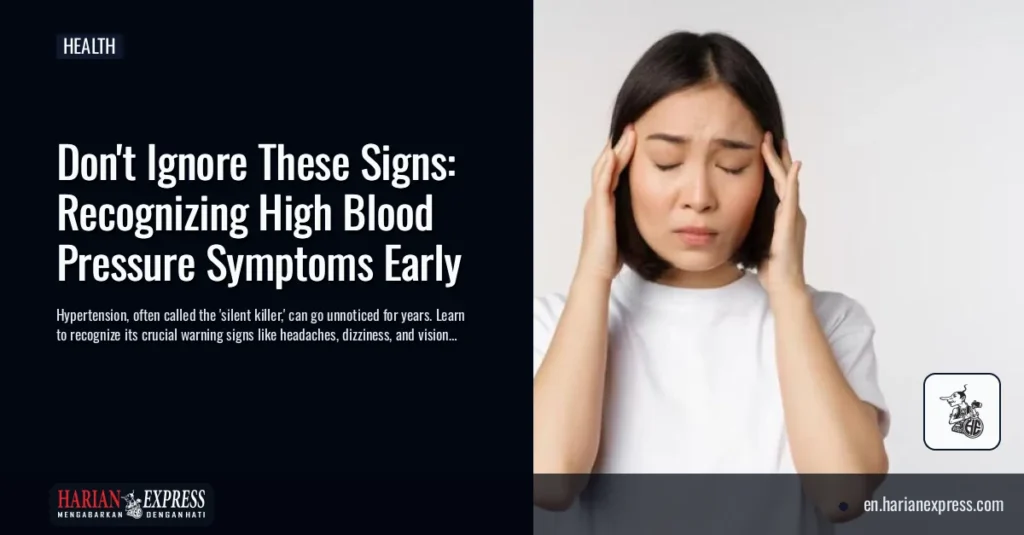
HARIANEXPRESS – Hypertension, commonly known as high blood pressure, is frequently referred to in the medical world as a “silent killer.” This condition can remain in the body for many years without showing any clear symptoms.
However, when blood pressure spikes to levels that endanger vital organs, the body typically starts to send crucial signals. Recognizing these signs of high blood pressure is a critical step to prevent severe complications, such as heart attacks, strokes, or kidney failure.
Warning Signs of High Blood Pressure to Watch Out For
Here are several indicators that suggest your blood pressure might be unstable and requires attention:
Pounding Headache in the Morning
Individuals with hypertension often experience intense, throbbing headaches, especially at the back of the head or neck. This pain commonly appears in the morning after waking up.
If you frequently experience such headaches that do not subside with rest or mild pain relievers, this could be a primary indicator.
Dizziness and Sensation of Losing Balance
Sudden dizziness or a spinning sensation (vertigo) should also be a cause for concern. A drastic increase in blood pressure can affect blood flow to the brain.
This may cause a person to feel unsteady, lose balance, or feel as though they might faint, especially if accompanied by weakness or numbness on one side of the body.
Sudden Blurred Vision
The eyes are organs highly sensitive to changes in blood pressure. Uncontrolled hypertension can damage small blood vessels in the retina, a condition known as hypertensive retinopathy.
As a result, your vision might suddenly become blurry, unfocused, or you may see floating dark spots (floaters).
Chest Pain and Shortness of Breath
These symptoms suggest that high blood pressure has put a strain on the cardiovascular system. The heart has to pump blood harder, requiring more oxygen.
If this demand is not met, you might feel tightness, heaviness, or pain in the chest (angina), often accompanied by shortness of breath as if running out of air.
Nosebleeds Without Clear Cause
Although nosebleeds (epistaxis) can be triggered by simple factors, sudden, heavy nosebleeds that are difficult to stop can signal a hypertensive crisis.
Extremely high blood pressure can cause fragile capillaries in the nasal cavity to rupture.
Heart Palpitations and Easy Fatigue
Feeling unusually tired without strenuous physical activity can indicate that the heart is working too hard. Individuals with hypertension often experience irregular or faster heartbeats.
This condition frequently leads to extreme fatigue that can disrupt daily productivity.
When to Get Checked
It is essential to understand that the only valid way to detect hypertension is by regularly measuring blood pressure using a tensimeter.
Do not wait until the symptoms above appear, as they often become noticeable only after organ damage has begun. Therefore, early detection is very important.
- Routine Checks: Adults should have their blood pressure checked at least once a year.
- Lifestyle Investment: Limit sodium intake, manage stress, engage in regular cardio exercise, and maintain an ideal body weight.
Maintaining normal blood pressure is not just a medical routine but a long-term investment in your quality of life. This is an effective way to keep the “silent killer” at bay.