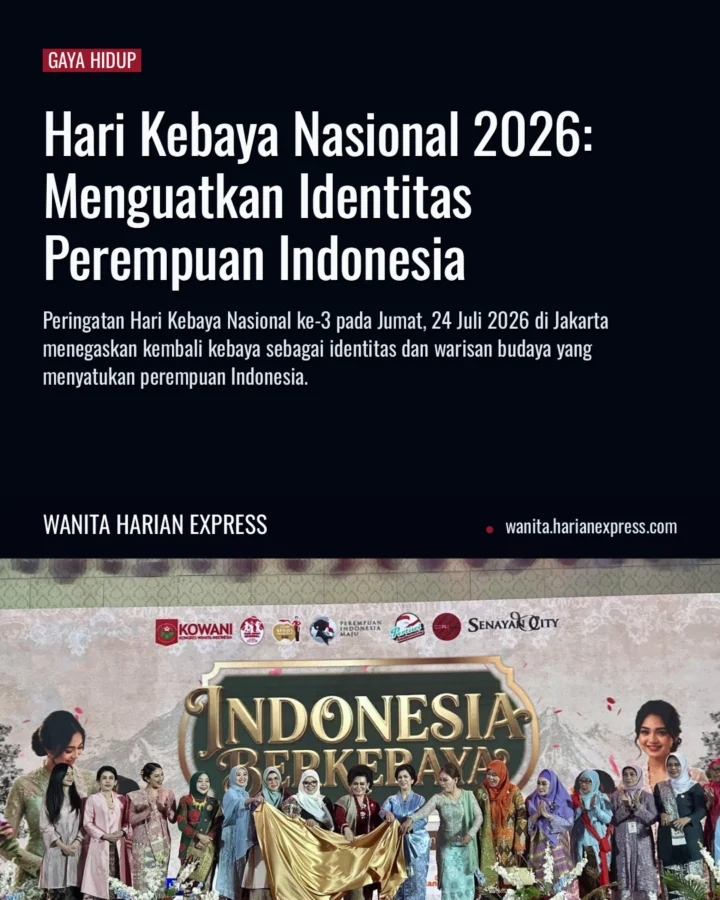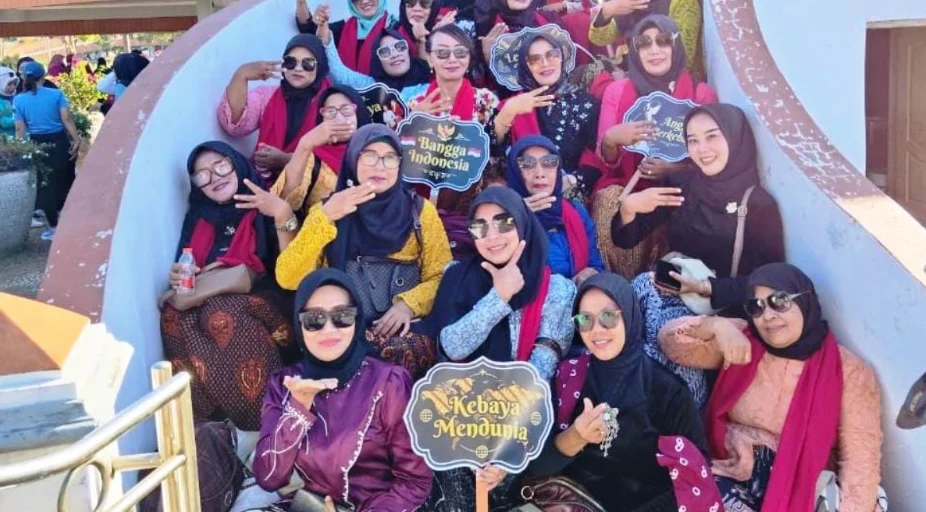
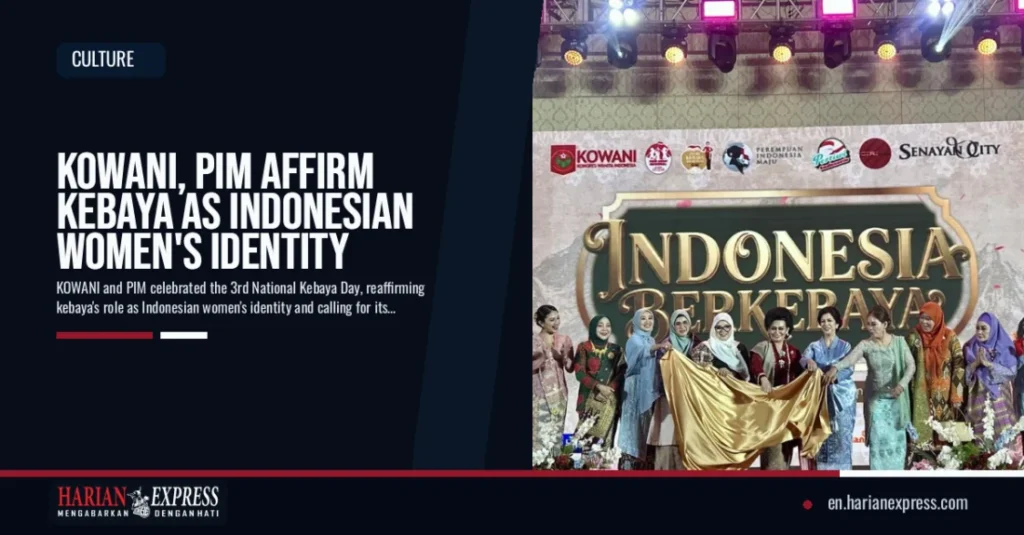
HARIANEXPRESS – The 3rd National Kebaya Day, commemorated on Friday (24/7/2026) in Central Jakarta, served as a significant moment to reaffirm the traditional attire’s profound meaning as a unifying identity for Indonesian women.
The annual commemoration, organized by Kongres Wanita Indonesia (KOWANI) and Perempuan Indonesia Maju (PIM), was held at Senayan City Hall. This event went beyond a mere display of traditional clothing, focusing on its deeper cultural significance for the nation.
It specifically aimed to underscore the enduring importance of kebaya as a core element of Indonesian women’s identity. The celebration marked the third official observance of National Kebaya Day, emphasizing its growing recognition and cultural affirmation.
This annual gathering serves as a vital momentum to consistently re-echo and reinforce the inherent values associated with the kebaya. These principles are crucial for upholding the cultural fabric of the nation’s female population.
For numerous kebaya enthusiasts and cultural advocates, this traditional garment represents far more than just an outward appearance. It profoundly mirrors the distinct character and extensive history embedded within the lives of Indonesian women.
Moreover, the kebaya embodies fundamental values that are intrinsically linked to the identity of women across Indonesia. It serves as a visual testament to their rich heritage and collective spirit.
Consequently, continuous efforts for the preservation of kebaya are considered absolutely essential, requiring broad collaboration from various societal stakeholders. Such concerted efforts aim to ensure this vital cultural heritage remains vibrant and appreciated by future generations.
“Kebaya is part of the nation’s identity that needs to be protected and passed on to the next generation,” stated Lana T. Koentjoro (Chairperson of DPP Perempuan Indonesia Maju) at Senayan City Hall.
The message consistently championed throughout the day highlighted kebaya as a powerful symbol of national pride and cultural resilience. This traditional dress continues to symbolize unity and shared heritage among Indonesian women across the archipelago, reinforcing their collective identity and inspiring future generations.