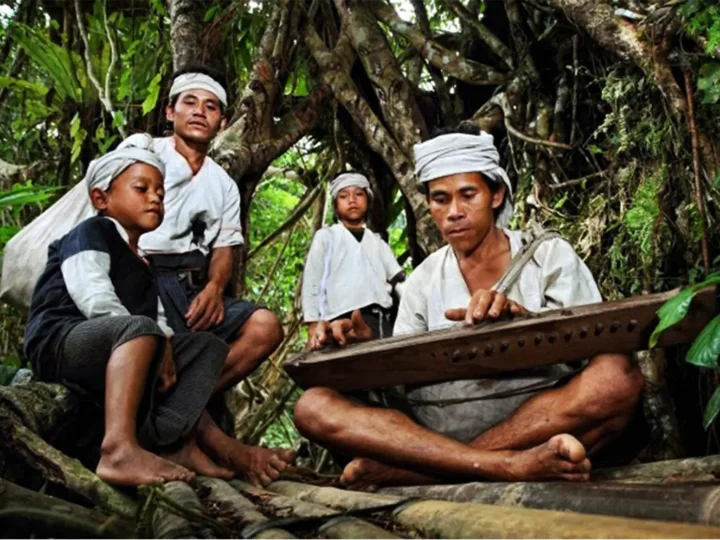
HARIANEXPRESS – Members of the Badui tribe, residing in Indonesia’s Lebak District, Banten Province, actively participated in the Presidential, Vice Presidential, and legislative elections held on February 14, 2024. This indigenous community demonstrated a profound sense of democratic duty despite not having received a formal education. Upholding their local customs, they exercised their voting rights at polling stations to elect national leaders and legislative members, showcasing remarkable political maturity.
The Badui community views voting as an essential national responsibility and believes citizens should not abstain from it. On election day, they willingly postponed their daily tasks, such as farming, to cast their ballots and help determine the country’s next leadership. When asked about their electoral involvement, Badui members expressed a keen desire to assist in selecting the nation’s future leaders, highlighting their sophisticated political understanding.
High Participation in the February 2024 Elections
Data from one voting location within the Badui area revealed significant engagement. Out of 159 registered residents, 139 individuals cast their votes, achieving an impressive participation rate of 87.42 percent.
The Lebak District General Election Commission (KPU) reported that the total number of voters in the Badui Indigenous Community Area for the 2024 Presidential and Legislative Election reached 6,078 people. This total included 3,384 male and 2,694 female voters, spread across 27 different polling stations, with an overall participation rate of 85 percent.
This high turnout among Badui residents in the 2024 Election can be attributed to extensive information dissemination efforts. Various stakeholders, including the Banten Provincial KPU, Lebak District KPU, and local community leaders, played crucial roles in educating the populace.
Preparing for the 2024 Regional Elections
According to the General Election Commission Regulation (PKPU) Number 2 of 2024, the simultaneous regional head elections, known as Pilkada, are scheduled for November 27. These elections will determine governors, deputy governors, mayors, deputy mayors, district heads, and deputy district heads.
To ensure the success of these upcoming regional elections, the Lebak District KPU has set an ambitious target for community participation in Badui areas, aiming for approximately 90 percent. This target seeks to match or even surpass the participation level observed during the presidential and legislative elections.
The Lebak District KPU is conducting special information dissemination strategies to achieve this goal. These efforts meticulously consider local cultural values and respect the established local wisdom within the Badui community.
All stakeholders are actively encouraging the Badui people’s participation in the regional election. Fortunately, traditional elders, known as jaro, have also expressed significant enthusiasm for the democratic process.
These jaro were actively involved in election socialization activities. They also urged their community members to exercise their right to vote by visiting polling sites on election day, similar to their encouragement during the 2024 presidential election.
“We will be voting for a trustworthy leader who can build the nation and improve the welfare of the people,” Jaro Saija stated in February.
The collaborative efforts between authorities and traditional elders are expected to enhance the Badui people’s understanding of regional voting. This increased understanding aims to foster a sense of responsibility in electing regional leaders, ultimately promoting the common welfare.
Valuable Lessons from the Badui Community’s Engagement
The Badui tribe comprises a group of Sundanese indigenous people residing in the interior of Lebak District, with a population of approximately 26 thousand. They represent a community known for their unique lifestyle, particularly the Inner Badui region, whose members largely distance themselves from the outside world.
This tribe is divided into two distinct groups: the Inner Badui Tribe and the Outer Badui Tribe. Their chosen way of life emphasizes unity with nature, upholding its preservation, and living side by side in harmony and peace.
The tribe’s distinctive culture is a valuable asset that requires protection. Modern society can gain significant insights from their steadfast philosophy of life, which consistently maintains a balance between nature and humans.
Leaders in the area can also draw lessons from the sincerity with which the Badui people conduct their lives, always prioritizing collective balance. The Badui community’s enthusiasm to engage in this political event should not only be a source of pride but also serve as a strong motivation for elected leaders to focus on regional development and the welfare of all community members, especially the Badui people.
The commitment demonstrated by elected regional leaders is also a crucial form of appreciation for the Badui people’s consistent efforts to participate in democracy by exercising their right to vote. Their eagerness to take part in this democratic event offers a valuable lesson for other people across Indonesia, encouraging them to visit polling sites and cast their votes on election day. The Badui people have also provided a clear example of contributing to the creation of safe and peaceful elections.