HARIANEXPRESS, International – The United States and Iran are set to sign a temporary peace Memorandum of Understanding (MoU) on June 19, 2026, in Switzerland, even as its details remain unrevealed and Israel’s request for the draft was denied.
Pakistan’s Prime Minister Shehbaz Sharif announced the deal on Monday, June 15, 2026, confirming an “immediate and permanent” cessation of hostilities across all fronts, including Lebanon.
A key economic incentive for Iran involves potential access to a $300 billion private investment fund aimed at reconstruction and development, as reported by a Reuters source.
US Vice President JD Vance stated that the agreement mandates nuclear inspectors’ return to Iran, identifying this as a core component preventing immediate public release of the document.
He further elaborated that the International Atomic Energy Agency (IAEA) and the United States will assist Iran in destroying its highly enriched uranium stockpiles, a provision explicitly detailed in the MoU.
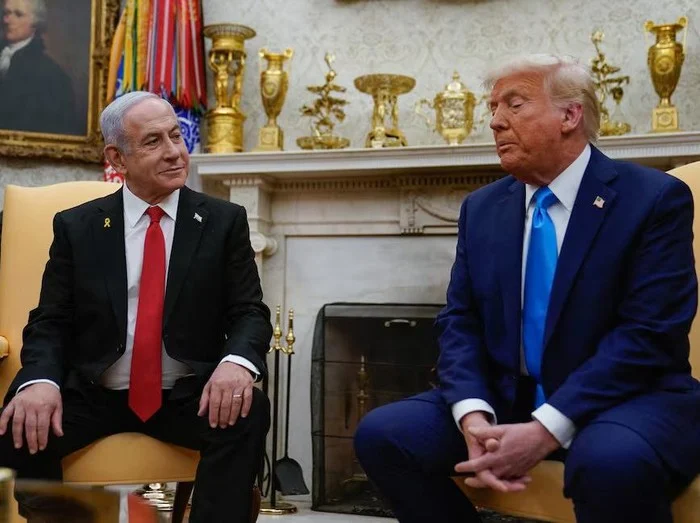
Despite being a close ally, Israel’s request to review the draft MoU before its signing was rejected by the United States, according to reports from Israeli media and journalists.
This decision is said to worsen strained relations between the two nations regarding the Iran peace deal and ongoing conflicts in Lebanon.
Israeli Prime Minister Benjamin Netanyahu confirmed on Monday, June 15, 2026, that Israel was unaware of the deal’s terms and not bound by it, having been excluded from negotiations.
Diplomatic correspondent Guy Azriel from i24NEWS stated, “I can now confirm that Israel has officially requested access to the Iran MoU and been denied. An extraordinary development between these close allies on an issue of such critical national security.”
The MoU was electronically signed by US President Donald Trump, US Vice President JD Vance, and Iranian Parliament Speaker Mohammad Bagher Ghalibaf.
TRT World reported that the agreement includes ending the US naval blockade and Iranian restrictions in the Strait of Hormuz, in exchange for Tehran’s commitment against nuclear weapons.
A senior Iranian source disclosed that Tehran initially sought $400 billion in war compensation from the US, a request Washington declined.
The proposed $300 billion fund is for private investment, explicitly not a reconstruction program or war reparations, designed to offer economic incentives for a final agreement.
Iran’s Foreign Minister Abbas Araghchi acknowledged potential economic benefits but expressed caution. He stated, “We have a history of broken promises, non-compliance, and agreement cancellations.”
US Vice President JD Vance refuted claims that Iran would receive billions in assets through the deal, asserting Iran’s prosperity hinges on meeting its obligations.
President Donald Trump has pledged to release the full text of the agreement within days, aiming for public transparency once diplomatic protocols are settled.
Muhanad Seloom, a senior researcher at the Middle East Council on Global Affairs, views the investment fund as a no-lose solution for Washington.
This arrangement also potentially avoids the negative perception that the peace deal focuses solely on releasing Iran’s frozen assets, estimated to exceed $100 billion.
The war between the US-Israel and Iran, which commenced on February 28, 2026, reportedly inflicted around $29 billion in losses on Tehran. Despite these challenges, Iran possesses significant domestic assets.
These assets include the world’s fourth-largest oil and second-largest natural gas reserves, alongside a young, educated population exceeding 92 million.
Such resources offer untapped business potential across sectors like petrochemicals, mining, agriculture, and tourism, despite nearly four decades of minimal foreign direct investment due to sanctions.