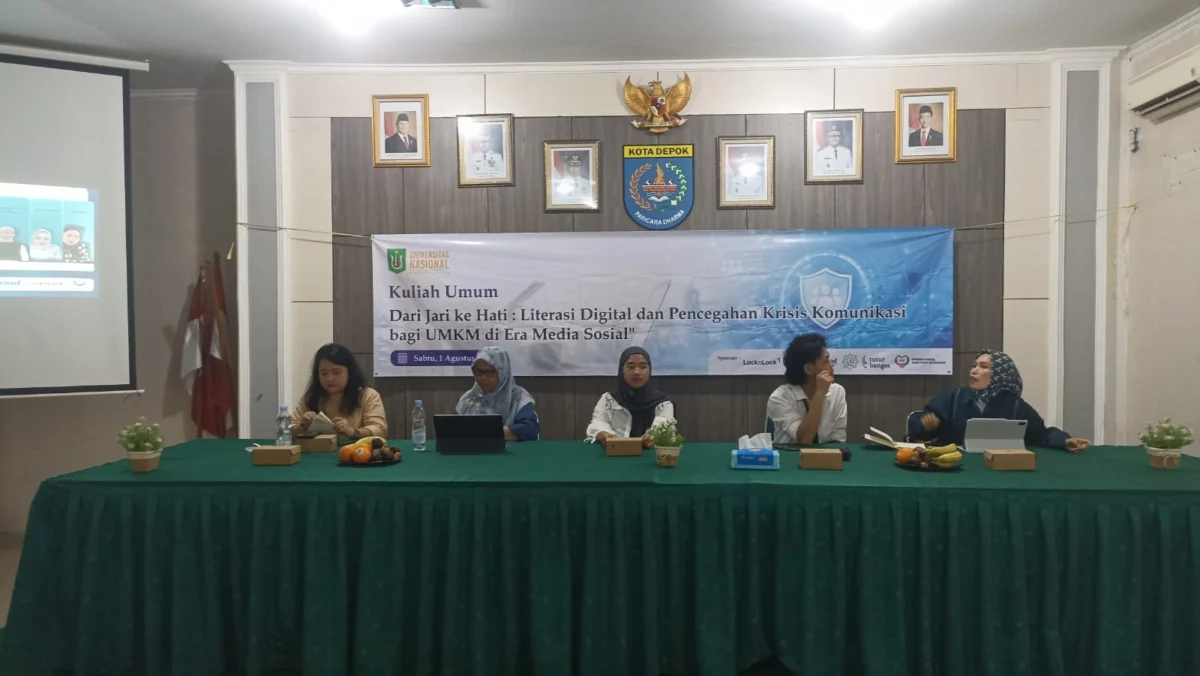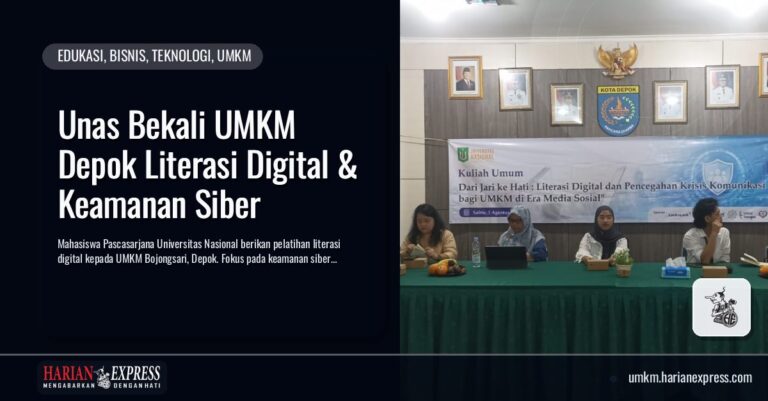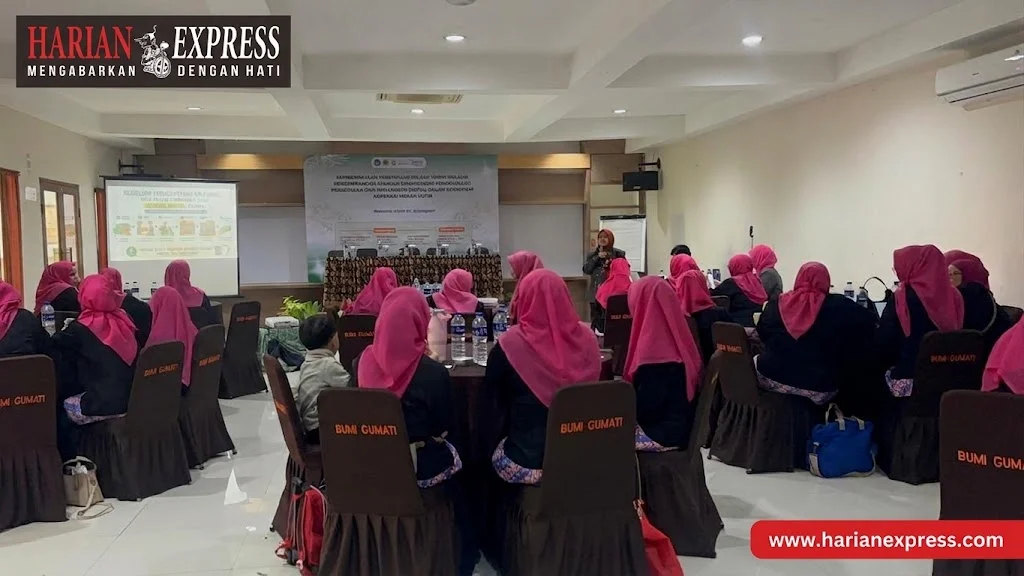
HARIANEXPRESS, DEPOK – In an era of rapid digitalization, social media serves not only as a lucrative platform for Micro, Small, and Medium Enterprises (MSMEs) but also as a dangerous arena rife with cybercrime. Addressing this growing challenge, postgraduate students from Universitas Nasional (Unas) Jakarta organized a digital literacy training session titled “Dari Jari Ke Hati: Bijak Menggunakan Medsos untuk Membangun Reputasi dan Kepercayaan Pelanggan” (From Fingers to Heart: Wise Social Media Use to Build Reputation and Customer Trust) today, Saturday, August 1, 2026.
Held at the Bojongsari District Office Hall, the event was a collaborative effort with UMKM Bosama, WomenPedia, Tutur Bangsa, and the Depok City Government. Dozens of local MSME entrepreneurs attended the training, which featured competent speakers in digital communication, cyber security, and information technology.
Navigating Digital Risks: Unas Students Equip MSMEs in Bojongsari
The training aimed to empower MSME owners with essential digital literacy skills. This initiative highlighted the importance of understanding both the opportunities and threats present in the digital landscape for small businesses.
Participants learned crucial strategies to safeguard their businesses from online dangers and to harness advanced technologies like Artificial Intelligence for growth. The comprehensive program ran until 3:00 PM WIB, providing in-depth insights into various aspects of digital safety and innovation.
Avoiding Legal Pitfalls in Digital Communication
The first session was led by Rita, a Senior Editor at Tutur Bangsa, who focused on communication challenges and the lack of legal understanding in the digital space. She highlighted the common misconception among the public, including MSMEs, regarding doxing.
Doxing involves uploading personal data such as faces and phone numbers of individuals suspected of fraud or causing business losses. Such actions, even when driven by being a victim, can lead to legal repercussions for the uploader.
“Even though the merchant is harmed, spreading the personal data of alleged perpetrators in public can potentially ensnare the uploader in legal trouble. Perpetrators can be charged with at least three articles, namely Article 27A and Article 45 paragraph 4 of the ITE Law, as well as Article 310 of the Criminal Code regarding defamation,” Rita emphasized.
Rita reminded participants to adhere to the four digital competency curricula from the Ministry of Communication and Digital: digital skill (proficiency), digital ethics (ethics), digital safety (security), and digital culture (digital culture). She also recommended that MSME owners separate their personal and business contact numbers to prevent data theft.
Guarding Against Financial Fraud and Social Engineering
The discussion intensified with Ria Tanjungpura, a practitioner from the Financial Transaction Reports and Analysis Centre (PPATK), who unveiled various cybercrime schemes targeting MSMEs. Ria noted that MSMEs are frequently targeted due to their online transactions, WhatsApp promotions, and often low account security.
Common fraud methods include phishing links (such as fake package receipts or traffic tickets), account hacking, illegal investments, and illicit online loans. Perpetrators often exploit victims’ panic to steal critical data like One-Time Passwords (OTPs).
“Use strong passwords—combine capital letters, numbers, and punctuation—and change them regularly. Never share OTPs with anyone, not even with parties claiming to be from the bank,” Ria advised.
If financial fraud occurs, Ria suggested remaining calm and immediately contacting the bank. She shared a practical tip: “To avoid the automated answering machine (robot) on banking hotlines, just press ‘0’ to connect directly with a banking operator and promptly block the funds.”
Artificial Intelligence: A Double-Edged Sword for Businesses
In the closing session, speakers Veronika Savitri and Muhammad Dilan introduced participants to Artificial Intelligence (AI) technology. For MSMEs, AI offers remarkable efficiency through features like 24-hour chatbots, automated inventory management, logo design (rebranding), and precise market targeting.
However, this advanced technology is also extensively misused by cybercriminals. Recent deceptive tactics include deepfake technology, where video and voice cloning are employed to mimic close contacts, falsely claiming emergencies and requesting fund transfers.
This harsh reality was echoed by an MSME participant, Ibu Santi, who shared her unfortunate experience of having funds drained from four bank accounts after falling victim to a scam call impersonating an online trading app’s customer service outside of business hours. Her experience underscored the critical need for heightened vigilance among business owners.
“AI is like a double-edged sword. It can be incredibly helpful, but it can also be very dangerous. It all depends on how we control this technology,” Veronika concluded.
Through this event, which concluded at 3:00 PM WIB, MSME entrepreneurs are expected to not only conduct online sales but also manage ethical digital communication, mitigate crises, and effectively fend off cybercrime from their devices, contributing to local economic advancement.
This comprehensive training, held in the context of an accelerating digital era, underscores the vital importance of digital literacy for MSME resilience and growth. The initiative reflects a proactive approach to empower local businesses, enabling them to navigate the complex digital environment with confidence.
The collaboration between Postgraduate students of Universitas Nasional, UMKM Bosama, WomenPedia, Tutur Bangsa, and the Depok City Government exemplifies a concerted effort to foster a safer and more ethical digital ecosystem. Such partnerships are instrumental in bridging knowledge gaps and providing practical tools for business owners.
By focusing on key areas such as legal compliance in digital communication, robust cybersecurity practices, and the responsible adoption of artificial intelligence, the program equipped participants with a holistic understanding. This multi-faceted approach ensures that entrepreneurs are not only aware of potential threats but also possess the skills to mitigate them effectively.
The lessons learned, from understanding the legal repercussions of doxing to implementing strong password protocols and identifying sophisticated deepfake scams, are directly applicable to the daily operations of these businesses. These practical insights are crucial for safeguarding their assets, reputation, and customer trust in an increasingly online-dependent market.
Ultimately, the training served as a critical reminder that while digital transformation offers immense opportunities for economic advancement, it equally demands heightened awareness and continuous learning. Empowering MSMEs with these essential digital competencies is fundamental to ensuring their sustainable success and contributing to the broader local economy.
The success of this educational endeavor highlights the ongoing need for similar community-focused programs that address the evolving challenges of the digital age. It paves the way for MSME entrepreneurs to not just survive but thrive, transforming digital risks into opportunities for innovation and secure growth. This collective effort ensures that the journey “From Fingers to Hearts” truly leads to greater security and prosperity for all.
As the event concluded, participants expressed gratitude for the actionable advice and critical information shared, recognizing its immediate relevance to their operations. The knowledge gained is expected to ripple through the local business community, fostering a more secure and digitally aware environment for transactions and interactions.
The organizers hope that the lessons imparted will serve as a foundation for MSMEs to build stronger digital presences, characterized by integrity and robust security measures. This commitment to continuous learning and adaptation is essential for any business operating in today’s fast-paced digital landscape, ensuring long-term viability and customer confidence.