HARIANEXPRESS – An expedition into Sebangau National Park on Minggu, August 2, 2026, underscored its critical role as Central Kalimantan’s biodiversity haven and a significant global carbon reservoir.
This vast conservation area, spanning over 568,700 hectares, lies between the Katingan and Sebangau rivers, forming one of Indonesia’s largest and most vital peat swamp forests. It serves as a last bastion for tropical peat ecosystems, supporting thousands of endemic plant and animal species, including the world’s largest population of Kalimantan orangutans.
The park boasts a unique blackwater ecosystem, characterized by dark, tea-like water, originating from ancient peat swamps rich in tannins from millennia of leaf decomposition. Beneath this dark water lies an extraordinary peat dome ecosystem, with peat layers reaching dozens of meters deep. This system sequesters enormous carbon reserves, earning the region its reputation as one of the ‘lungs of the world’.
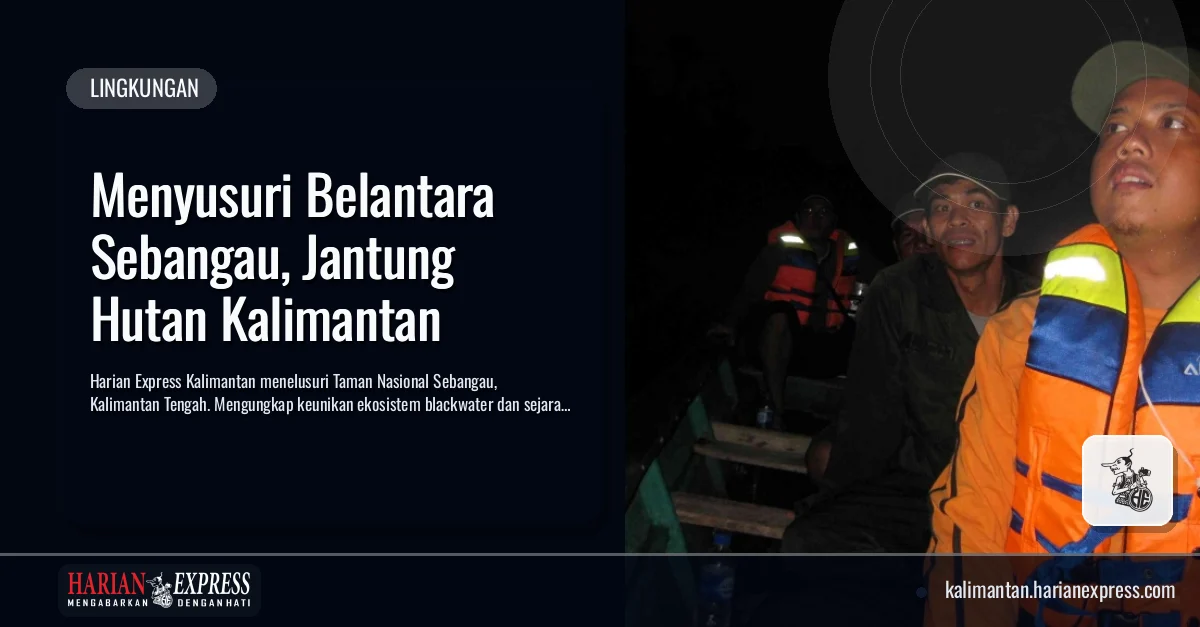
The immersive journey, which began from Kereng Bangkirai Pier in Palangka Raya, departed slowly on a klotok boat into the calm river. The trip into the park’s interior lasted a full day, leading the group to Mendawai Village in Katingan Regency by nightfall. This experience transformed perceptions of nature, connecting with a long history of environmental damage while fostering hope for recovery.
This natural landscape, however, has endured significant environmental challenges. The 1970s saw the opening of the Sebangau region for various timber exploitation rights (HPH), leading to a significant increase in logging activities. The situation worsened dramatically in 1998, during the early Reformasi period, when massive illegal logging took place.
Despite its profound ecological importance, Sebangau National Park faces ongoing threats from various factors. Annual forest fires, often resulting from land clearing, and extreme droughts pose a continuous danger. Additionally, illegal activities such as poaching and continued illegal logging persistently harm this delicate ecosystem.
In response, the government, through the Sebangau National Park Office, actively collaborates with local communities and international organizations for conservation. These partnerships reinforce forest patrols, implement peatland restoration programs, and foster sustainable ecotourism development. Wildlife monitoring is also advanced through the deployment of camera traps and drones.