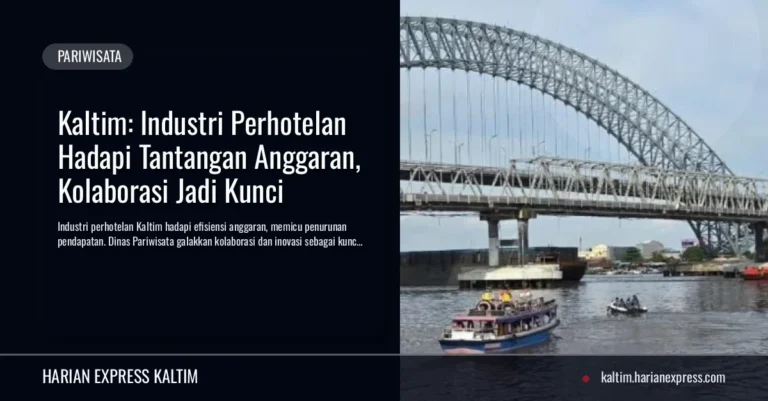
HARIANEXPRESS – The hotel industry in East Kalimantan is grappling with significant challenges stemming from government budget efficiencies, leading to a pressing need for both collaboration and innovation. Observed as early as Thursday, July 30, 2026, these budget cuts have directly impacted the tourism sector, resulting in reduced revenue and operational adjustments across hotels in the region.
Addressing Budget Efficiency Challenges
Government budget efficiencies have directly affected the tourism sector and the hotel industry in East Kalimantan, causing a decline in income. This situation has also influenced various operational aspects, including workforce reductions and adjustments to hotel services.
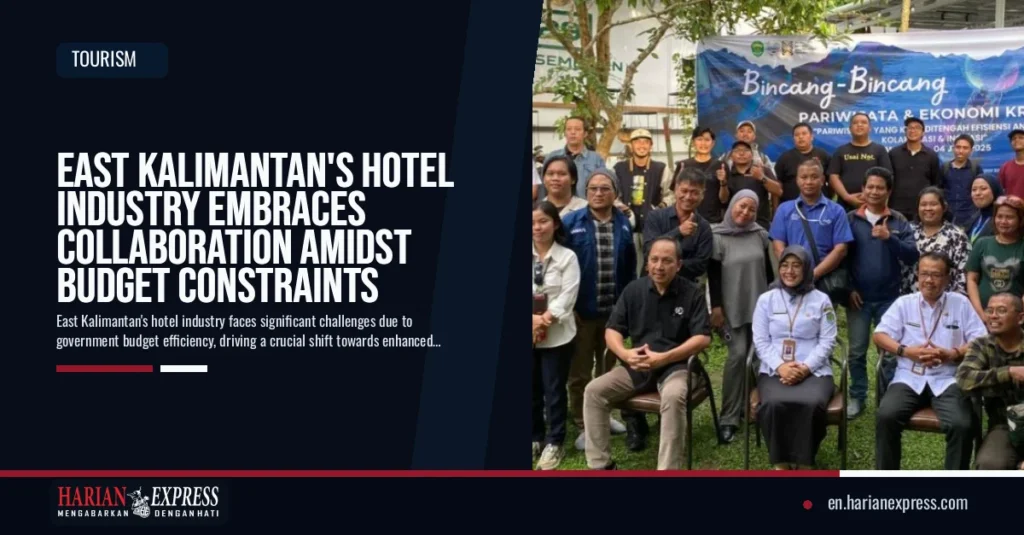
The impact of these budget efficiencies is particularly noticeable in Meeting, Incentive, Convention, and Exhibition (MICE) activities, which traditionally serve as a primary revenue source for hotels. In response, the East Kalimantan Provincial Tourism Office initiated the “Bincang-Bincang Pariwisata I 2025” (Tourism Talk I 2025) event.
Tourism Talk I 2025: A Forum for Strategy
The event, held at 29 Coffee and Eatery on May 4, focused on the theme “Pariwisata yang Kuat di Tengah Efisiensi Anggaran: Kolaborasi dan Inovasi.” This gathering brought together tourism industry players, academics, and policymakers to exchange ideas and formulate effective strategies.
Ririn Sari Dewi, Head of the East Kalimantan Provincial Tourism Office, emphasized the critical importance of cross-sector synergy in her presentation. She highlighted strengthening the resilience of the tourism industry through joint efforts.
“Kami menyadari bahwa efisiensi anggaran membawa dampak besar terhadap kegiatan MICE, yang selama ini menjadi salah satu sumber utama pendapatan hotel. Namun di balik tantangan ini, ada peluang untuk berinovasi dan memperkuat kolaborasi lintas sektor,” Ujar Ririn Sari Dewi.
Positive Outlook: Rising Hotel Occupancy
Despite the challenges, a positive trend emerged from data released by the Balikpapan City Central Statistics Agency (BPS) concerning star-rated hotel occupancy. As of April 2025, the occupancy rate increased to 53.79%, marking a significant rise of 14.59% compared to March 2025.
Ririn Sari Dewi welcomed this positive development, expressing hope that other regions would experience similar improvements. She stressed that sustaining this momentum requires active cooperation from all relevant parties.
Innovation and collaboration in promotional efforts, particularly through social media, offer a promising path forward for the hotel industry. Digital campaigns have proven effective in attracting tourists, thereby significantly boosting hotel visits.