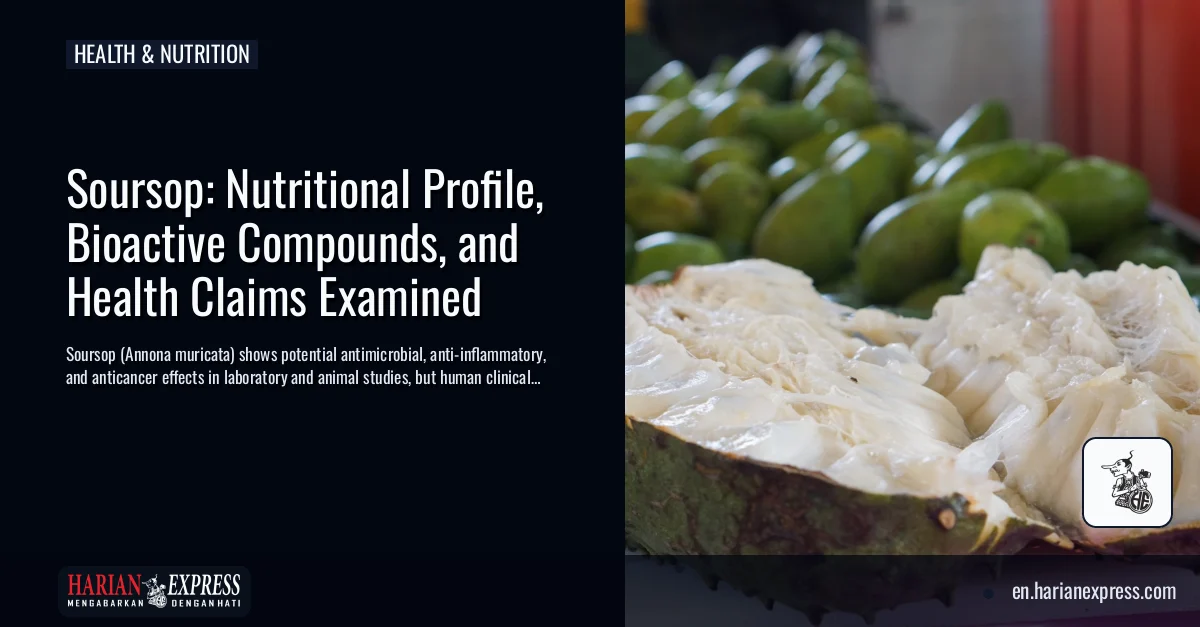
HARIANEXPRESS – Soursop, a tropical fruit known as Annona muricata, contains bioactive compounds with potential antimicrobial, anti-inflammatory, and anticancer activities, primarily observed in laboratory and animal studies. (3/8/2026)
Soursop, also called graviola or guanabana, is cultivated across Central and South America, Africa, and Southeast Asia. Traditionally, various parts of the A. muricata tree have been used to address conditions like diarrhea, fever, parasitic infections, and pain.
This large, heart-shaped green fruit, measuring 15–20 cm in diameter, is rich in carbohydrates for energy and dietary fiber for digestive health. It also contains vitamin C, several B vitamins, and minerals such as potassium, calcium, magnesium, and iron.
Laboratory assays have demonstrated soursop extracts’ antimicrobial activity against various pathogens, including Gram-positive Staphylococcus aureus and Gram-negative Escherichia coli. Preliminary experimental studies have also reported antiviral effects against several viruses.
Numerous flavonoids like quercetin and kaempferol, along with alkaloids such as annonaine, have been isolated from soursop. Some extracts have exhibited anti-inflammatory effects in cell and animal models, reducing leukocyte migration and inflammatory mediators.
Preclinical studies indicate soursop extracts may influence blood glucose regulation, lipid metabolism, and blood pressure levels. However, appropriate doses, efficacy, interactions, and long-term safety for treating diabetes, dyslipidemia, or hypertension in humans remain unestablished.
Over 100 different annonaceous acetogenins (AGEs) have been isolated from soursop’s leaves, seeds, bark, roots, and fruit. These AGEs exhibit cytotoxic activity against breast, prostate, lung, pancreatic, colon, liver, cervical, and hematological cancer cells in laboratory models.
Soursop-derived compounds have been shown to induce apoptosis and interfere with cellular energy production by inhibiting mitochondrial complex I. They also suppress tumor cell migration and invasion, and modulate oxidative stress and inflammatory pathways in preclinical models.
Despite these promising observations, the current lack of high-quality human data limits the establishment of standard therapeutic doses or long-term intake guidelines. A 2024 systematic review identified only five eligible human studies involving 273 participants, all judged to have a high or critical risk of bias.
There is currently insufficient reliable evidence that soursop prevents, treats, or cures cancer, and soursop products should not replace established medical therapies. Patients considering concurrent use must consult their oncology team due to variable product composition and inadequately studied herb-drug interactions.
Annonacin, a compound found in soursop, is associated with potential neurotoxicity concerns. Experimental data suggest AGEs may disrupt nerve cell mitochondria, potentially leading to neurotoxic effects.
Observational research has linked frequent consumption of Annonaceae products to atypical Parkinsonian disorders in some populations. While findings do not establish causality, they warrant caution, especially with prolonged consumption of concentrated preparations from leaves, seeds, bark, or roots.
Seeds should not be deliberately consumed or crushed into food, as their extracts contain concentrated bioactive compounds that have demonstrated toxicity in preclinical research. Short-term studies on specific preparations did not identify clinically significant deterioration in blood counts or liver and kidney markers, though these studies were small, short, and at high risk of bias, preventing the establishment of general or long-term safety.
Soursop is recognized for providing carbohydrates, fiber, vitamins, minerals, and various phytochemicals. While laboratory and animal studies show encouraging evidence for the antimicrobial, anti-inflammatory, metabolic, and anticancer activities of its compounds, these are predominantly preclinical findings.
Insufficient clinical evidence exists to recommend soursop or its extracts for disease prevention or treatment, including cancer. Concerns about neurotoxicity and the absence of established therapeutic dosages further highlight the need for caution, making rigorous, large-scale clinical trials essential.
It is important to differentiate between consuming the edible fruit pulp as food and the medicinal use of concentrated preparations made from leaves, seeds, bark, or roots, as these may differ substantially in composition and toxicological risk. www.news-medical.net