
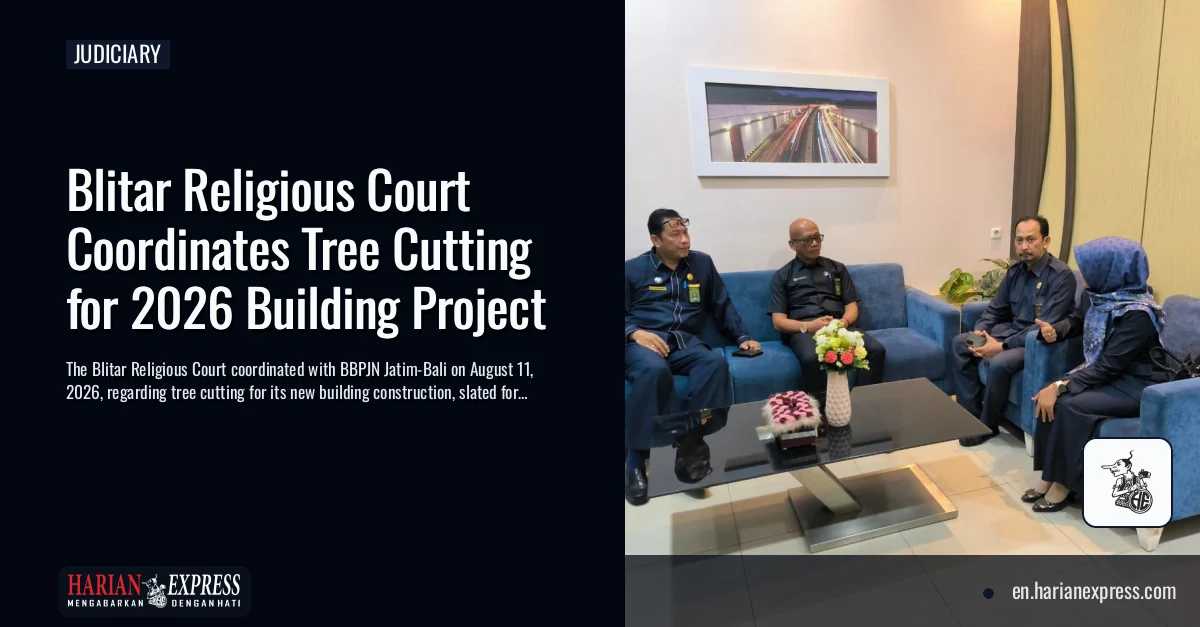
HARIANEXPRESS – The Blitar Religious Court recently held a coordination meeting with the Balai Besar Pelaksanaan Jalan Nasional (BBPJN) Jatim-Bali concerning the planned tree cutting for its new building construction. This significant step was taken on Wednesday, August 12, 2026, to ensure the smooth progress of the project, which is scheduled for Fiscal Year 2026.
The meeting, crucial for the forthcoming development, took place at the BBPJN Jatim-Bali office, located on Jalan Raya Waru No. 20, Sidoarjo, Jawa Timur.
Details of the Coordination Meeting
Tree cutting is an essential part of the preparations for the new Blitar Religious Court building, which will be situated at Jalan Kenari RT 01/RW 02, Kelurahan Plosokerep, Kecamatan Sananwetan, Kota Blitar.
The coordination meeting saw the attendance of several key figures. Among those present were the Sekretaris Pengadilan Tinggi Agama Surabaya, the Ketua Pengadilan Agama Blitar, the Sekretaris, the Kepala Subbagian Umum dan Keuangan, the Pranata Komputer, and other relevant officials.
During the discussions, the Blitar Religious Court articulated the technical requirements associated with the construction site. This included specifically addressing the presence of trees located within the designated area for the new building’s development.
This coordination effort is a vital component in guaranteeing that the construction proceeds in accordance with established regulations. It also ensures that both technical considerations and environmental aspects surrounding the site are carefully taken into account.
Koordinasi ini penting agar setiap tahapan yang berkaitan dengan pembangunan dapat dilaksanakan secara tertib dan sesuai dengan ketentuan yang berlaku.
The construction of the new Blitar Religious Court building forms part of a broader program focused on developing judicial facilities and infrastructure for Fiscal Year 2026. By engaging in cross-agency coordination from the initial preparation stages, authorities aim for orderly and efficient project execution.
This proactive approach is expected to facilitate the establishment of more representative and effective judicial service facilities for the community. The collaboration ensures that all stages of the construction adhere to applicable provisions.